
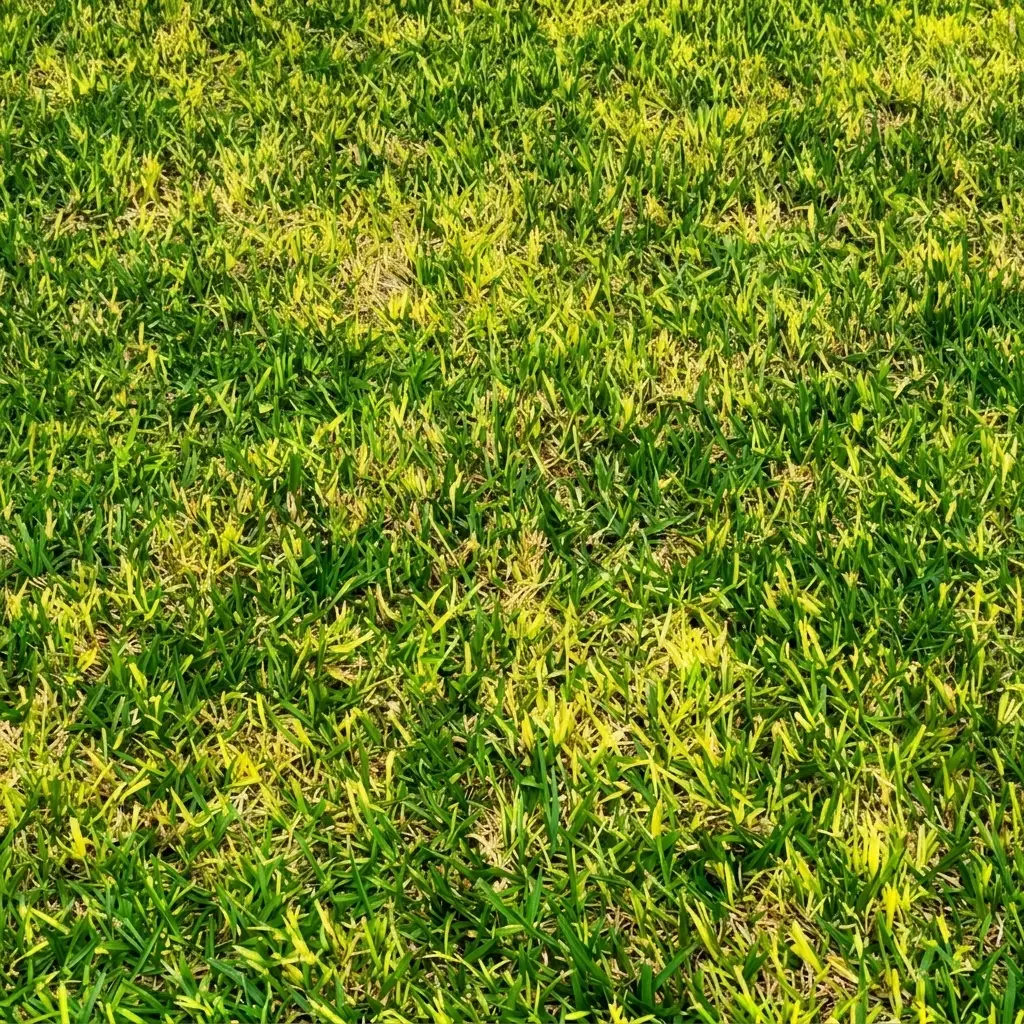
Iron Deficiency in Lawn Grass: Diagnose Yellow St. Augustine in Tampa
How to Tell If Your Lawn Is Nutrient Deficient
Yellow grass in your Hillsborough County yard usually points to a specific nutrient problem, not just bad soil. This guide walks you through each deficiency, starting with the most common, so you can identify what your St. Augustine lawn actually needs and stop guessing.
You can tell your lawn is nutrient deficient by looking at color patterns, growth rate, and how quickly your turf wilts under stress. In St. Augustine grass (Stenotaphrum secundatum), the type of yellowing and which leaves turn yellow first narrow the diagnosis fast.
- Uniform pale yellowing across the whole lawn
- Yellow between leaf veins while the veins stay green
- Brown, burned tips on older grass blades
- Purple or very dark older leaves
- Thin, weak turf that wilts in one hot afternoon
Most nutrient deficiencies in Tampa Bay lawns involve nitrogen, iron, potassium, manganese, or phosphorus tie-up. Alkaline and shell-based soils common in this area lock out certain nutrients even when they are present in the ground. For a broader view of every reason St. Augustine turns yellow, read our yellow grass diagnosis guide.
Areas near trees, shaded strips by driveways, and low spots in the yard often show trouble first because of higher stress. Mowing too short and frequent heavy irrigation make nutrient problems more visible, especially in summer heat above 90°F.
Visual diagnosis is the first step. A soil test confirms which nutrients are actually low or locked up.
Lawn Nitrogen Deficiency: Uniform Pale Yellowing, Oldest Leaves First
Lawn nitrogen deficiency causes an even, pale yellow color across the entire lawn, starting with the oldest leaves near the base of each plant.
- Light green to lemon-yellow overall color
- Older blades near the base of the plant turning pale first
- New growth staying a bit greener, since nitrogen moves from old tissue into new growth
Nitrogen is mobile inside the plant. When nitrogen runs low, the plant pulls it from old growth to feed newer leaves. That is the key difference from iron deficiency, where the newest leaves yellow first. Nitrogen deficiency produces an even look across the turf, while chinch bugs and fungus create irregular spots and patches instead.
Common causes in Tampa Bay include heavy summer rain leaching nitrogen out of sandy soil, skipping a spring fertilization, or relying only on low-nitrogen weed and feed products.
A grass nitrogen deficiency reduces growth rate, thins the turf, and lets more soil show between runners, and weeds move into those gaps quickly. Over-applying nitrogen to fix the color in one weekend leads to burning, thatch build-up, and more chinch bug pressure later in summer.
A balanced program spaced over 3 to 4 visits per year works better than one heavy bag. Our When to Fertilize Your Lawn in Tampa Florida article explains timing, including how to stay within the blackout window under Hillsborough County Ordinance 21-42. You can also learn when a professional fertilization program is safer than DIY bags from the store.
A soil test will confirm nitrogen levels, but visual symptoms of nitrogen deficiency in St. Augustine are usually very reliable on their own.
Iron Deficiency in Lawn Grass: Interveinal Chlorosis, Newest Leaves First
Iron deficiency in lawn grass shows as yellowing between veins on the newest leaves, while the veins remain green. This condition, often called iron chlorosis, is common in Tampa lawns.
Iron is essential for chlorophyll production. When your grass does not get enough iron, chlorophyll production drops in fresh growth, and the result is a striped yellow-and-green pattern instead of a deep, even green color. Iron is immobile inside the plant, so once a leaf grows without available iron, that leaf stays chlorotic for the rest of its life. Symptoms typically appear in spring with new growth and continue through the season.
- New blades that are light green to yellow with thin, bright green veins
- Older leaves closer to the soil that remain green or dark green
- The lawn appearing mottled or striped from above, sometimes with stunted growth
Younger leaves are affected first because iron cannot relocate once absorbed. Yellow patches can point to iron deficiency, especially in spots with high soil pH.
| Feature | Nitrogen Deficiency | Iron Deficiency |
| Which leaves yellow first | Oldest (base of plant) | Newest (stolon tips) |
| Pattern on the blade | Whole leaf turns pale | Veins stay green, spaces between veins turn yellow |
| Overall look | Uniform paleness | Striped or mottled |
- High soil pH from shell or limestone fill, especially in newer subdivisions. Iron availability is best between pH 6.0 and 7.0
- Heavy irrigation with alkaline well water that raises pH over time
- Soil compaction or poor drainage that limits root access to iron
- High phosphorus levels tying up iron in the root zone
Cool, wet conditions can also trigger chlorosis. Heavy summer rainfall saturates sandy soils and reduces oxygen around roots, which worsens the problem. Iron chlorosis often shows strongest near sidewalks, driveways, raised mounded areas, and spots where construction fill sits over rubble.
Many homeowners confuse iron chlorosis with nitrogen deficiency and add more nitrogen. That makes things worse, since nitrogen deepens the green color on healthy older leaves but leaves the yellow striping on new growth untouched.
To treat iron chlorosis, apply a foliar spray using chelated iron or ferrous sulfate for quick cosmetic green-up. Chelated iron stays stable and available even in alkaline soils, which makes it the better choice for high-pH Tampa yards. Use soil amendments like elemental sulfur to slowly lower high soil pH and make existing iron more available long term, and reduce soil compaction through annual aeration.
Maintaining soil pH between 6.0 and 7.0 gives you the best iron absorption. Our lawn fertilizer service Tampa program includes micronutrient treatments that address grass iron deficiency without overloading nitrogen.
Lawn Potassium Deficiency: Leaf Tip Burn and Weak Drought Tolerance
Lawn potassium deficiency shows as brown, burned leaf tips and poor drought and stress tolerance in St. Augustine turf.
Potassium does not change color as dramatically as nitrogen or iron. Instead, look for yellowing along the edges of older leaves, freckled or spotted brown areas near the tips, tips that dry out and fray, and fast wilting during one hot, dry afternoon even when surrounding lawns stay firm.
Potassium regulates moisture movement and cell wall strength. Low levels lead to weak stems, a shallow root system, and more disease pressure.
In Tampa Bay, potassium deficiency often shows up in high-traffic areas like play zones and dog runs, along concrete where heat reflects and bakes the soil, and in sandier parts of the yard where nutrients leach quickly.
The difference from simple drought stress matters. Drought stress improves within 24 to 48 hours after deep watering. Potassium deficiency damage at the tips stays brown even after watering, and new growth stays weak.
Some maintenance fertilizer products contain little or no potassium, and repeated use over several years can create a quiet potassium shortage. A lab soil test that lists N-P-K and base saturation confirms potassium levels and shows whether you need a higher-K blend at your next fertilization window.
Fixing this deficiency is slower than greening with nitrogen or iron, since you are rebuilding reserves in the root zone over several months. Do not guess with extra potash, since too much potassium can interfere with magnesium and calcium uptake and create new problems.
Manganese Deficiency: Mimics Iron Chlorosis in High-pH Soil
Manganese deficiency looks a lot like iron chlorosis, especially in lawns with high soil pH, but often includes more speckling and stunted growth.
Manganese is a micronutrient that supports photosynthesis and enzyme activity, and in St. Augustine it affects both color and density. Visual signs include yellowing between veins on new leaves similar to iron chlorosis, tiny brown specks or peppering on the grass blades, and very short, stubby growth that does not respond well to nitrogen or iron alone.
In Hillsborough County, alkaline or shell-heavy soils lock out both iron and manganese once soil pH climbs above about 7.5. Both nutrients can be present in the soil but remain unavailable to roots.
This matters for diagnosis. Adding more iron will not fix a manganese deficiency and can confuse your results. If you see iron-like yellowing that does not clear up after one or two iron treatments, use a full micronutrient package containing iron, manganese, and other trace elements.
Avoiding over-liming helps prevent conditions that trigger both iron chlorosis and manganese lock-out. Lime spill from garden beds near shrubs and trees next to your lawn can raise pH at turf edges and increase lock-out in those border strips.
A detailed soil test measuring manganese and pH together helps your lawn care provider adjust both macros and micros in one plan, so you are not chasing color problems all summer with the wrong products.
Phosphorus Lock-Out: Why More Phosphorus Isn't the Answer in Tampa Soil
In most Tampa Bay lawns, phosphorus is not missing. It is already high, and extra phosphorus can actually lock out iron and other nutrients.
Many new home sites in Hillsborough County are built on fill that already contains plenty of phosphorus, and older lawns received phosphorus from decades of fertilizer use and reclaimed water irrigation.
Phosphorus lock-out happens when excess phosphorus binds with iron, zinc, and other micronutrients so roots cannot absorb them. This leads to yellowing even when the soil is technically rich.
The typical pattern: grass appears yellow or off-color despite regular fertilizing, iron and manganese products give only short-term or weak improvement, and soil tests show medium to very high phosphorus levels.
Adding more phosphorus to push growth in this situation is harmful and increases runoff risk into Tampa Bay waterways. Hillsborough County Ordinance 21-42 limits phosphorus and nitrogen fertilizer timing, and applying these nutrients during the blackout is restricted to reduce that same runoff risk.
If a soil test reports high or very high phosphorus levels, your plan needs balanced nitrogen and potassium, micronutrients, and organic matter, not extra phosphorus. Core aeration, topdressing with compost, and encouraging a deep root system over several seasons help dilute and redistribute excess phosphorus in the root zone.
Our fertilizer blends for St. Augustine are built so you are not applying phosphorus unless a lab report shows a true deficiency.
Soil Testing: How to Confirm What Your Lawn Actually Needs
A soil test is the only reliable way to confirm which nutrients your lawn lacks and which are already high.
A full test reports soil pH (the ideal range for iron availability is 6.0 to 7.0), organic matter level, macronutrients like phosphorus and potassium, and secondary nutrients and micronutrients depending on the lab.
To collect a sample, take 10 to 15 small plugs 3 to 4 inches deep from across the yard, mix them in a clean bucket, let the soil air dry, then send about 1 cup to the lab. Test every six months to monitor nutrient levels, and always retest about one year after any major correction or sod replacement.
DIY soil-test kits may not accurately measure iron levels, and they can also misread soil pH, which leads to wrong choices when treating iron chlorosis or nitrogen deficiency.
A soil report helps you separate low nitrogen from normal nitrogen with poor timing, grass iron deficiency from high-pH iron lock-out, and true potassium shortage from disease damage.
Professional lawn services in Tampa Bay often include soil testing as part of an annual program, using those reports to plan seasonal blends and rates.
How to Fix Each Deficiency Without Over-Fertilizing
You fix nutrient deficiencies by matching the treatment to the problem, using correct rates and timing, not by dumping extra fertilizer on yellow grass.
Nitrogen: Use a balanced slow-release nitrogen source at labeled rates outside the blackout. Split applications into 3 to 4 rounds per year, targeting 2.0 to 5.0 pounds of actual nitrogen per 1,000 square feet annually.
Iron: Treat visible iron deficiency with light foliar applications of ferrous sulfate or chelated iron for fast green-up. Applying iron during cooler weather prevents leaf burn on the blades.
Potassium: Apply a higher-K fertilizer only when soil tests show low levels. Spread across at least two applications in spring and fall.
Manganese: Use a micronutrient blend containing manganese along with iron when soil tests or stubborn chlorosis show that iron alone is not working.
Phosphorus: Avoid adding phosphorus unless soil tests show low levels. When low, correct with one or two modest applications.
- Mow St. Augustine at 3.5 to 4 inches
- Sharpen mower blades every 4 to 6 weeks during the growing season
- Water 1 to 1.5 inches weekly, deeply but infrequently, to support healthy root growth
- Aerate compacted soil once a year to improve oxygen levels and nutrient uptake
If your past store-bought fertilizer bags have not worked, read Why Your Store-Bought Fertilizer Isn't Working to learn about timing, analysis numbers, and hidden nutrient limits.
Once corrections begin, color changes in St. Augustine usually appear in 7 to 14 days for nitrogen and iron treatments, and several weeks to months for deeper potassium or pH-related fixes.
Frequently Asked Questions
Is my yellow lawn from iron deficiency or nitrogen deficiency?
If the oldest leaves turn yellow first and everything looks evenly pale, that is nitrogen deficiency. If the newest leaves show yellow between green veins, that is iron deficiency.
Can I fix iron chlorosis by just using more nitrogen?
No. Nitrogen deepens green color in healthy areas but does not correct iron lock-out or high soil pH. New growth will still show chlorosis.
How fast will my grass recover after I apply iron?
Foliar iron applications can green up a lawn within 24 to 48 hours under warm conditions. Soil pH correction takes several months.
Do I need to test iron levels in my soil?
Total iron content in soil is often already high. What matters more is soil pH and whether that iron is in a form your roots can access.
How often can I apply iron to my lawn?
Follow label rates. Limit foliar iron to a few applications per growing season to avoid dark, patchy color and possible staining on concrete or walkways.
Why does my neighbor's lawn stay dark green while mine is pale?
Differences in soil fill, irrigation water sources, mowing height, and fertilization schedules can produce very different results on the same street.
Can overwatering cause nutrient deficiencies?
Yes. Frequent shallow watering leaches nitrogen, reduces oxygen at the roots, and worsens iron chlorosis in cool, soggy soil.
Get a Healthier, Green Lawn with Four Seasons Lawn Care
Four Seasons Lawn Care helps you turn a yellow, nutrient-stressed St. Augustine lawn into a thicker, healthy lawn with accurate diagnosis and careful fertilization.
Your technician looks at leaf color, thatch, soil conditions, and irrigation before recommending nitrogen, iron, potassium, or micronutrient products. We combine soil testing, seasonal fertilization, iron and micronutrient treatments, and mowing and watering guidance into a full-year plan.
If you want to compare DIY efforts to a managed program, our Professional vs DIY fertilization article explains the tradeoffs in detail.