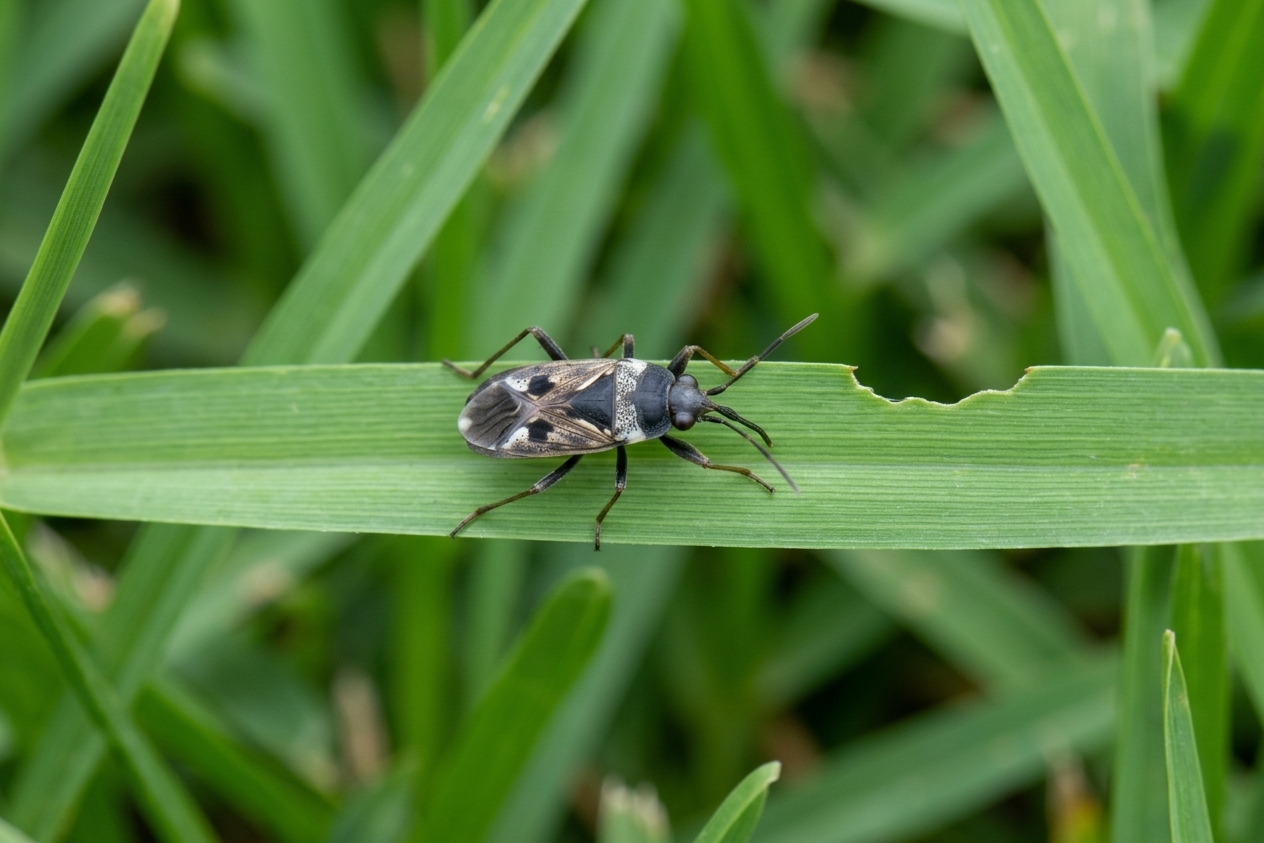
The southern chinch bug is a tiny sap-feeding insect that walks over 400 feet in under an hour. That speed is why an infestation can cross your entire yard and reach your neighbor's lawn within days.
In Hillsborough County, chinch bugs feed almost entirely on St. Augustine grass. They live between the thatch and the organic soil, in a zone roughly 1½ inches below the grass surface. That is why surface-level sprays often miss them entirely.
These bugs do not eat leaves. They pierce the grass stolon and inject a toxin that blocks vascular transport. Your grass wilts even when you water because the internal pipes are clogged. The worst Florida chinch bug damage concentrates in central and southern counties, and Hillsborough County sits right in that high-risk zone.
They also move in groups. Once they kill one patch of stolon, the whole group marches together to fresh grass nearby. That outward ring you see spreading across Tampa yards is exactly what this behavior looks like.
One female chinch bug lays over 250 eggs on average in her lifetime. In Tampa's summer heat, those eggs hatch in 6 to 13 days. The full egg-to-adult cycle takes 5 to 8 weeks, which adds up to 3 to 4 overlapping generations per year in Central Florida.
There are two types of adults in Tampa populations. Long-winged adults can fly and establish new infestations across the neighborhood. Short-winged adults cannot fly, but at over 400 feet per hour on foot they do not need to.
