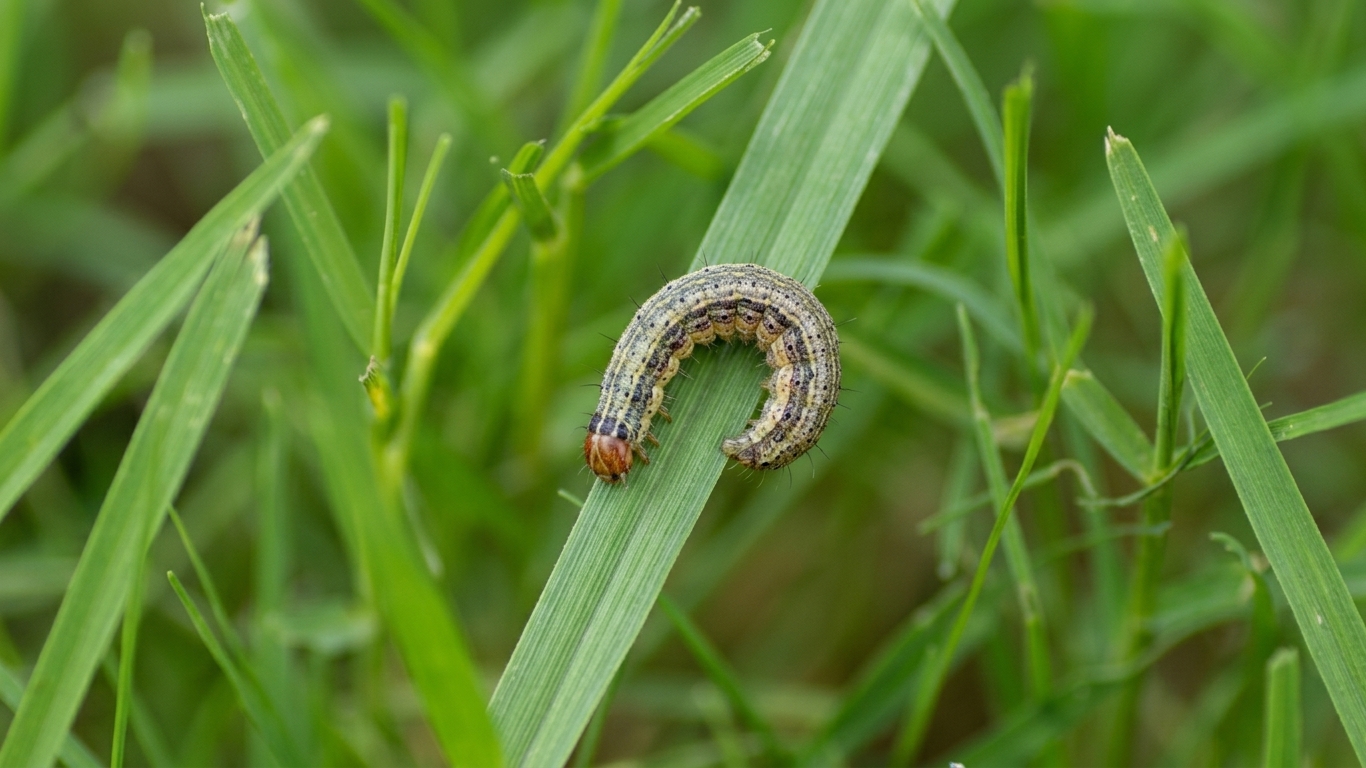
Sod webworm damage in Tampa St. Augustine lawn
Lawn Care

Sod Webworms in Tampa: Signs, Treatment, and How to Stop Them Returning

Tropical sod webworms destroy St. Augustine grass across Tampa and Hillsborough County in 3 to 4 overlapping generations per year, completing their 35-day life cycle fast enough to strip your lawn bare before you realize what is happening. The larvae are Herpetogramma phaeopteralis, and they feed on your grass blades for 2 full weeks before the overnight damage becomes visible. Small tan moths zigzagging over your lawn at dusk are the first warning sign most Tampa homeowners ignore. By the time large brown patches appear, the larvae have already entered their most destructive final stage.

This guide gives you the exact signs, the confirmed soap flush diagnostic test, the Tampa-specific treatment calendar, and the prevention system that stops Herpetogramma phaeopteralis before it strips your lawn bare. When you are ready for professional help, our lawn insect control Tampa program covers the Tampa Bay area with no contracts required.

What Are Sod Webworms and Why Tampa Lawns Get Them

Tropical sod webworms are the larvae of Herpetogramma phaeopteralis moths, and they destroy St. Augustine grass blades overnight in Tampa lawns. They complete 3 to 4 full life cycles per year in Hillsborough County's Zone 9b climate, which is what makes them so relentless.

Two sod webworm species damage Tampa lawns. Herpetogramma phaeopteralis is the dominant Florida species, built for Zone 9b heat and humidity. Crambus mutabilis is a cooler-climate species that also appears in Florida but causes far less damage in Tampa's summer conditions. Knowing which one you have matters for treatment timing.

Both belong to the family Crambidae, the snout moths. Look closely at the head and you see prominent labial palps projecting forward like a snout. That forward projection is your first identification clue when a moth lands near you at dusk.

The faster field test is wing posture. When Herpetogramma phaeopteralis rests on a grass stem, it holds its wings flat in a triangular shape. Crambus mutabilis folds its wings tight against its body in a tube-like shape. Watch a resting moth for 3 seconds and you know which species you are dealing with.

Here is what matters most. The adult moth does not eat your grass. It flies in a low zigzag pattern over your lawn at dusk, mating and depositing clusters of 10 to 35 creamy-white eggs directly onto moist grass blades during the evening hours. The eggs are your problem, not the moth.

At Tampa's optimum summer temperature of 30 degrees Celsius, Herpetogramma phaeopteralis completes the full egg-to-adult cycle in just 21 days. That speed allows 3 to 4 overlapping generations to accumulate through the rainy season, each one producing more larvae than the last.

Tampa lawns have no true off-season for this pest. Overwintering larvae resume feeding in March when soil temperatures rise, months before homeowners in cooler areas of Florida start watching for damage.

One more risk factor worth knowing. High-nitrogen fertilized lawns attract more egg-laying female moths than unfertilized ones. Lush nitrogen-rich tender growth is the preferred egg-laying environment. The greenest lawn on your block is often the first one hit. For complete guidance on nitrogen timing and the summer blackout that reduces sod webworm pressure, see our lawn fertilization program Tampa resource.

How to Identify Sod Webworm Damage in St. Augustine Grass

Sod webworm damage starts as subtle translucent window feeding patches on individual blades during the early larval stages, then escalates overnight into large ragged brown areas when larvae reach their destructive 5th and 6th instar.

The damage builds in stages, and understanding each stage helps you catch the problem before the overnight destruction arrives.

During the first 4 instar stages, the caterpillars are small and can only scrape the soft tissue from the blade surface. They leave behind the translucent skeletal structure of the leaf, a technique called window feeding. From a distance your lawn takes on a grayish faded cast that looks exactly like localized drought stress or the beginning of a fungal problem.

Then the 5th and 6th instar hits. These final larvae consume the majority of their lifetime food intake in just 3 to 7 days before pupation. The subtle feeding of the previous 2 weeks becomes visible all at once. This is the overnight damage Tampa homeowners report, and it is a biological illusion. The larvae were there the entire time.

Here is exactly what to look for at each stage:

  • Notched blade edges — entire sections of blade chewed from the margins, leaving ragged irregular cuts. These are completely distinct from clean mower cuts.
  • Frass — bright green pellets roughly pinhead size scattered through the thatch. This is the definitive biological signature of an active sod webworm infestation. No other common Tampa lawn problem produces bright green frass. If you find it, larvae are actively present.
  • Silk tunnels — thin silk webbing lining the larval tunnels in the thatch layer. Most visible in early morning when dew makes the webbing reflective. Get down close to the thatch on a dewy morning and look across the surface.
  • Clipped appearance — irregular patches that look as if someone mowed them with a dull blade while leaving surrounding grass tall.

The larvae themselves are 0.75 to 1 inch long, grayish-green with a dark yellowish-brown head and 4 parallel rows of dark spots running down the abdomen. They hide in the thatch during the day and surface at night to feed.

August through November is the peak visible damage window in Tampa. Two look-alikes cause confusion during this period. Dog urine creates bleached uniform spots with no ragged edges and no frass. Drought stress yellows grass broadly and evenly across a wide area rather than creating the irregular chewed patches with frass that webworms leave behind. If you find frass and notched blades together, the cause is sod webworms.

How to Confirm Sod Webworms: The Soap Flush Test

Mix 2 tablespoons of liquid dish soap in 1 gallon of water, pour the solution over a 2-foot by 2-foot section of turf at the edge of the damaged area, and count larvae that surface within 10 minutes. Four or more larvae per 4 square feet confirms a treatment-level infestation.

The soap flush test is the most accurate method for confirming sod webworm larvae before committing to a chemical treatment. Follow this exact protocol:

  1. Mix 2 tablespoons of liquid dish soap into 1 gallon of water in a bucket or watering can.
  2. Apply at the transition zone, the edge between damaged brown grass and healthy green grass, not the dead center of the damage.
  3. Saturate a 2-foot by 2-foot area completely. Pour slowly and evenly.
  4. Observe for 10 minutes. The surfactant irritates the larvae and disrupts their silk tunnels, forcing them to surface.
  5. Count every larva that appears. Four or more per 4 square feet triggers treatment.

What you are looking for: 0.75 to 1 inch grayish-green caterpillars with a dark head and 4 rows of dark spots. When disturbed they curl into a C-shape defense posture, a key identifying trait confirmed by the frass and silk tunnel presence nearby.

Two results demand immediate attention. If larvae of multiple sizes surface together, overlapping generations are present and a structured second application schedule is required, not just a single treatment. If your lawn is already drought-stressed or heat-stressed, lower your threshold to 2 to 3 larvae per 4 square feet before treating. Stressed St. Augustine tolerates far less defoliation than a healthy lawn.

Test at least 3 to 4 spots across your lawn before drawing any conclusions. Sod webworms concentrate in clusters, not uniform distribution. A clean flush in one area does not mean the rest of the lawn is clear.

Sod Webworms vs Chinch Bugs vs Grubs in Tampa Lawns

Three Tampa lawn problems produce brown patches that look similar from the street but differ completely in blade condition, root stability, and lawn location. Getting the diagnosis wrong costs you twice. You spend money on the wrong treatment, the real problem keeps spreading, and you lose more lawn in the meantime.

FeatureSod WebwormsChinch Bugs (Blissus insularis)White Grubs (Tomarus subtropicus)
Damage patternRagged irregular patchesUniform yellowing expanding outwardIrregular patches, straw-colored
Blade conditionNotched, chewed edges with frassScorched dry blades, no notchingBlades intact, straw-colored
Root conditionRoots firmly anchoredRoots intactRoots severed — turf peels like carpet
Lawn locationShade or shrub-adjacent areasSunny edges near pavement, drivewaysAnywhere in lawn
Time of yearMay–NovemberMay–SeptemberAugust–October
Confirmation testSoap flush testFlotation test — coffee can methodDig test — pull test

The single fastest field test between webworms and grubs: grab a handful of damaged turf and pull firmly. If the turf peels up with no resistance and no roots underneath, white grubs severed the root system. If the turf holds firm despite looking brown and chewed, sod webworms are the cause. Roots intact eliminates grubs immediately with no further testing needed. For the complete grub identification and treatment protocol, see our lawn pest treatment Tampa guide.

Flotation test for chinch bugs: Remove both ends of a coffee can. Push the open can 2 inches into the soil at the edge of the damaged area. Fill with water. If chinch bugs are present they float to the surface within 5 minutes. For complete chinch bug identification and treatment guidance, see our professional lawn pest control Tampa resource.

Fall Webworm Warning: Read This Before Treating Anything

Fall webworms produce the large visible silk tent nests in tree branches across Tampa neighborhoods every late summer. They are a tree pest, not a lawn pest. They do not live in or damage St. Augustine grass.

If you see web structures in your trees above a browning lawn, the tree pest and the lawn problem are 2 completely separate issues requiring 2 completely different treatments. Do not spray your lawn for fall webworms. Do not spray your trees for sod webworms.

When Sod Webworms Are Most Active in Tampa: Month by Month

Tropical sod webworms in Hillsborough County produce 3 to 4 overlapping generations per year. The highest-risk damage window runs from September through November when larval populations reach peak density after a full rainy season of accumulation.

Most national sod webworm advice runs 4 to 6 weeks behind Tampa Bay reality. Northern state calendars do not account for Zone 9b year-round larval activity or for the overwintering larvae that resume feeding in March. Follow this Tampa-specific calendar instead, not the national bag label.

MonthActivityYour Action
March–AprilOverwintering larvae resume feeding as soil temperatures rise. First adult moths begin appearing at dusk.Begin evening monitoring. Watch for zigzag moth flight.
MayAdult moths active at dusk. Primary preventative window opens.Apply chlorantraniliprole now for season-long protection.
June–AugustRainy season begins. Multiple overlapping generations accumulate. Nitrogen blackout starts June 1.Monitor weekly with soap flush. No nitrogen or phosphorus applications.
September–NovemberPeak high-risk period. Maximum larval density. Most overnight damage occurs.Soap flush monitoring required weekly. Treat immediately if threshold reached.
December–FebruaryActivity slows. Surviving larvae burrow into thatch to overwinter.No effective treatment window. Plan May preventative application.

Here is something most Tampa homeowners do not know. Following the Hillsborough County June 1 nitrogen ban does more than keep you legally compliant. It actually reduces webworm pressure on your lawn. Nitrogen-rich tender growth is the primary attractant for egg-laying female moths. A lawn respecting the blackout is a less desirable egg-laying target than an over-fertilized lawn producing a flush of soft new growth during peak moth season.

During blackout months, apply iron or potassium to maintain turf strength without triggering the caterpillar-attracting growth surge that invites infestation at the same time.

The Most Effective Sod Webworm Treatments for Tampa Lawns

Bifenthrin, a contact pyrethroid eliminates sod webworm larvae within 2 to 5 days of evening application and provides 8 to 12 weeks of residual protection on St. Augustine grass blades.

Not all sod webworm products work the same way. The right product depends entirely on whether you are stopping an active infestation or protecting against future generations before eggs hatch.

Active IngredientMode of ActionKnockdownResidualApplication Notes
BifenthrinContact pyrethroid2–5 days8–12 weeksLiquid spray, evening application, do NOT water in
ChlorantraniliproleSystemic diamide7–14 days12–16 weeksSpring preventative, single application covers season
SpinosadIngestion/contact3–7 days1–2 weeksOrganic option, evening application, reapply frequently
Bt-kBiological toxin2–5 days2–5 daysCaterpillar-specific, safe for beneficial insects, breaks down in sunlight
Steinernema carpocapsaeBeneficial nematode3–7 daysOngoingEvening application to pre-moistened lawn, organic alternative
CarbarylContact carbamate2–4 days4–6 weeksBroader spectrum, use when bifenthrin unavailable
HalofenozideInsect growth regulator5–10 days8–10 weeksTargets young larvae, low impact on beneficials

Critical Rule: Do Not Water In Liquid Spray Treatments

This is the most important difference between sod webworm treatment and grub treatment. Confusing these 2 protocols is the most common treatment failure in Tampa lawns, and it is completely avoidable.

For sod webworms, the insecticide must stay on the grass blades so larvae ingest it while feeding at night. Do not irrigate for at least 24 hours after any liquid application. Watering in the treatment washes the chemical off the blades before larvae surface to feed, and the treatment fails entirely.

For grubs, the opposite rule applies. Grub products must be watered in immediately to reach the root zone where larvae are feeding underground.

Granular products are the exception. Granular insecticides for sod webworms require a light irrigation of 0.2 inches after application to release the active ingredient from the carrier granule into the upper thatch where larvae hide. Granular irrigation and liquid non-irrigation are both correct when applied to the right product type.

Apply a second treatment 4 to 5 weeks after the first. This timing targets newly hatched larvae from the next generation cycle before they reach the destructive 5th instar. A single treatment that eliminates the current generation leaves the next generation completely unprotected.

One thatch warning before you treat. If your thatch layer exceeds 0.5 inches, dethatch before applying anything. Thick thatch prevents liquid spray from penetrating to the larvae hiding below.

Professional Sod Webworm Treatment vs DIY in Tampa

Professional sod webworm treatment with concentrated chlorantraniliprole delivers 12 to 16 weeks of season-long control from a single spring application. DIY retail sprays of bifenthrin or spinosad require precise evening timing, correct non-irrigation protocol, and a second application 4 to 5 weeks later.

Here is the key difference between professional treatment and a trip to Home Depot. Licensed applicators use concentrated liquid chlorantraniliprole at a higher active ingredient level than any retail product on the shelf. That concentration gap delivers longer residual protection from a single application.

Before buying anything at retail, know this one fact. Scotts GrubEx is a grub product, not a sod webworm product. It targets soil-dwelling beetle larvae and is formulated for the root zone. It does not work on surface-feeding caterpillars. Do not use it for sod webworm treatment.

The 3 most common DIY failure points are:

  • Wrong application time — treating in the early morning when larvae are hiding deep in the thatch instead of the afternoon when they surface to feed
  • Watering in the treatment — applying liquid spray and then running irrigation, washing the insecticide off the blades before larvae touch it
  • Treating only the brown spots — leaving surrounding eggs and young larvae in the healthy grass to complete the cycle and produce the next generation 3 to 5 weeks later

Call a professional when your soap flush confirms above 4 larvae per 4 square feet, your lawn is already showing visible overnight damage, or a previous DIY treatment produced resurgence damage 3 to 4 weeks later.

Four Seasons Lawn Care handles sod webworm control for Tampa Bay area lawns with no contracts and no guesswork on timing.

Will St. Augustine Grass Recover After Sod Webworm Damage

St. Augustine grass recovers from sod webworm defoliation within 14 to 28 days in most Tampa cases because sod webworms chew the blades but leave the stolons and root system completely intact. This is the critical difference from white grub damage, which severs the roots and often requires immediate sod replacement.

St. Augustine spreads through stolons, horizontal above-ground runners that root at the nodes and push outward across the soil surface. As long as those runners stay alive and rooted after treatment, the grass regenerates new blades from each node. The defoliated lawn is not dead. It is temporarily stripped.

There is one Tampa-specific complication that changes this equation. If defoliation happens during Tampa's August peak heat, exposed stolons face direct UV radiation and temperatures that the leaf canopy normally buffers. This sunscald kills the stolon crown even after the larvae are eliminated, which is why prompt August treatment is so critical. A lawn stripped bare in August has fewer than 2 weeks before sunscald risk becomes severe.

Damage LevelDefoliationRecovery PathTimeline
LightUnder 30%Treatment + 1 inch per week irrigation14–21 days
Moderate30–50%Treatment + iron application + mowing height raised to 4 inches21–28 days
SevereAbove 50% or shriveled stolonsSod replacement requiredNo natural recovery

Follow this recovery protocol after treatment:

  • Confirm larvae eliminated — run a follow-up soap flush 3 days after treatment
  • Apply 1 inch of water per week in early morning to keep stolons cool and hydrated
  • Apply iron or manganese during blackout months for compliant nutrition that promotes green-up without triggering nitrogen-driven tender growth
  • Raise mowing height to 4 inches to maximize the remaining photosynthetic surface area

If you are choosing a replacement cultivar, reconsider Floratam. It is the most susceptible St. Augustine variety to sod webworm feeding. Captiva and Amerishade show moderate webworm resistance. CitraBlue is still being evaluated for long-term resistance, but its dense growth habit provides structural resistance to early-stage feeding that Floratam does not offer.

Birds and Digging Animals: What They Are Telling You

Birds pecking Tampa lawn sod webworm indicator

Starlings and robins pecking in tight concentrated clusters on a specific area of your Tampa lawn from June through November are a direct early warning of sod webworm larvae in the thatch. These birds detect larval movement before the grass damage becomes visible.

Watch where the birds are feeding, not just that they are feeding. Starlings and robins pecking in a tight cluster on one specific zone are identifying the highest-density larval zones for you. Run the soap flush exactly where the birds are working. They are doing your diagnostic work for free.

A single starling consumes dozens of sod webworm larvae per day. That bird activity is beneficial, not harmful to your lawn. Do not apply broad-spectrum pyrethroid insecticides to drive birds away from the area. You are eliminating your free biological control.

Trichogramma fuentesi is a microscopic parasitic wasp that lays its eggs inside sod webworm eggs and kills them before they hatch. Florida field studies document this wasp parasitizing up to 80% of sod webworm eggs in healthy ecosystems. Broad-spectrum pyrethroid applications eliminate Trichogramma fuentesi along with the larvae, removing a natural control that works for free every single season.

Steinernema carpocapsae beneficial nematodes work alongside bird predation as part of a layered biological control system. Apply in the evening to a pre-moistened lawn as a targeted organic alternative for low-level infestations.

Now here is the critical distinction that changes your diagnosis entirely. Digging animals indicate grubs, not webworms. Armadillos creating conical hole clusters are rooting for white grubs or mole crickets deeper in the soil, not surface-dwelling sod webworms. Raccoons tearing up sod strips are hunting for white grubs in the root zone. Sod webworms are small surface feeders living in the upper thatch and they do not trigger the intensive digging behavior that root-zone pests cause. If your lawn is being torn up like a rototiller in late summer, run a dig test for white grubs, not a soap flush for webworms.

Seasonal timing helps narrow the diagnosis further. Summer bird pecking from June through November points to sod webworms. Spring pecking from March through May more likely indicates white grubs emerging from overwintering.

How to Prevent Sod Webworms From Returning in Tampa

The 4 most effective sod webworm prevention strategies for Tampa St. Augustine lawns are a May chlorantraniliprole application before the first generation hatches, maintaining a 4-inch mowing height year-round, keeping thatch below 0.5 inches, and following the summer fertilizer blackout from June 1 through September 30.

Prevention costs a fraction of what treatment costs. Build your system around these 8 practices.

  1. Annual preventative application — apply chlorantraniliprole once in May. A single application delivers 12 to 16 weeks of residual protection, covering the full peak season from May through September with one intervention before the first generation hatches.
  2. Maintain 3.5 to 4 inch mowing height — taller Floratam and Palmetto grass develops a denser canopy that shades the stolons from heat stress and tolerates more defoliation before visible collapse. A lawn mowed at 4 inches withstands significantly more feeding pressure than a lawn scalped to 2 inches.
  3. Keep thatch below 0.5 inches — thatch above 0.5 inches insulates larvae from heat, birds, and beneficial insects during the day and blocks liquid spray from contacting them during treatment. Dethatch annually in spring before the May preventative window opens.
  4. Deep infrequent irrigation — apply 1 inch of water once per week. This allows the thatch to dry between cycles, conditions detrimental to larval survival. Moths prefer moist humid environments for egg-laying. A lawn on a daily light irrigation schedule is more attractive to female moths than one on a deep weekly schedule.
  5. Monitor at dusk — walk your lawn at 7 PM from May through November. If you see tan moths flying in a low zigzag pattern over the turf, run a soap flush within 3 to 5 days to catch the first generation before it reaches the destructive 5th instar.
  6. Preserve your biological controls — minimize broad-spectrum pyrethroid applications where populations are low. Trichogramma fuentesi wasps and ground beetles provide free natural suppression every season. Eliminating them with broad-spectrum chemistry removes protection that works 24 hours a day at zero cost.
  7. Consider Bt-k or Steinernema carpocapsae for low-level populations — when moth activity begins in May but soap flush confirms below-threshold populations, a preventative Bt-k or nematode application targets young larvae without eliminating beneficial insects. Reserve bifenthrin for confirmed threshold-level infestations.

Prevention is always cheaper than repair, and one May application protects your entire Tampa season.

Sod Webworm Treatment Cost in Tampa Bay

A one-time professional sod webworm treatment in Tampa costs $250 to $460 for a standard residential lawn. Full St. Augustine sod replacement if an infestation produces multiple generations without treatment runs $7,250 to $17,000.

Run the numbers yourself. Professional treatment is 15 to 30 times less expensive than sod replacement. A Tampa homeowner who pays $400 per year in preventative treatment for 10 years spends $4,000 total, less than the minimum cost of replacing a 5,000 square foot lawn a single time.

Waiting costs more than acting. By the time multiple generations have accumulated through the rainy season, you are dealing with emergency pricing and potential sod replacement on top of treatment costs.

A certified lawn care provider following Green Industries Best Management Practices eliminates your ordinance violation risk while managing pest pressure at the same time. For Tampa homeowners, combining pest management and compliance in one professional program is the most cost-effective approach available in Hillsborough County.

Frequently Asked Questions

Do I treat the moths or the larvae?

Treat only the larvae — never the moths. Adult Herpetogramma phaeopteralis moths do not eat grass and their constant movement makes contact insecticides completely ineffective against them. Every insecticide application targets the caterpillars feeding in the thatch after dark. Spraying moths at dusk wastes product and leaves the larvae below completely untreated.

Why did my lawn die overnight?

The overnight appearance is a biological illusion. First through fourth instar larvae feed subtly for nearly 2 weeks without producing visible damage. When larvae reach their 5th and 6th instar they consume the majority of their lifetime food intake in 3 to 7 days, which is when the damage becomes visible all at once. The destruction was building the entire time.

What time of day should I apply insecticide for sod webworms?

Apply liquid insecticides between 4 PM and 7 PM. Sod webworm larvae emerge from the thatch at dusk to feed on grass blades. Evening application puts the insecticide on the blades exactly when the caterpillars are most active and most exposed to the chemical residue.

Should I water in my sod webworm treatment?

Do not water in liquid spray treatments for at least 24 hours after application. The chemical must remain on the grass blades so larvae ingest it while feeding at night. This is the opposite of grub treatment protocol. Grub products must be watered in immediately to reach the root zone. Confusing these 2 protocols is the most common treatment failure in Tampa lawns.

When do sod webworms come out in Tampa?

Adult moths appear in Tampa from May through November with peak larval populations from September through November. In Zone 9b, overwintering larvae resume feeding in March. Tampa lawns have no true off-season for this pest unlike lawns in northern Florida or cooler states.

Will sod webworms come back next year?

Sod webworms return every year in Tampa because Zone 9b temperatures prevent complete population elimination. An annual preventative application of chlorantraniliprole in May eliminates the first generation before visible damage begins: the lowest-cost intervention point in the entire season.

Your Next Step

Sod webworms are chewing through Tampa St. Augustine lawns overnight right now, and most homeowners do not realize the damage until the 5th instar larvae have already stripped large sections of turf. Four Seasons Lawn Care serves the Tampa Bay area with professional lawn insect control programs that stop Herpetogramma phaeopteralis before the first generation reaches its destructive peak. Get your free lawn analysis and find out where your lawn stands.

Get a free lawn analysis.
Our experts know Tampa lawns. We can confirm whether sod webworms are the cause and stop the current generation before the damage reaches your stolons.