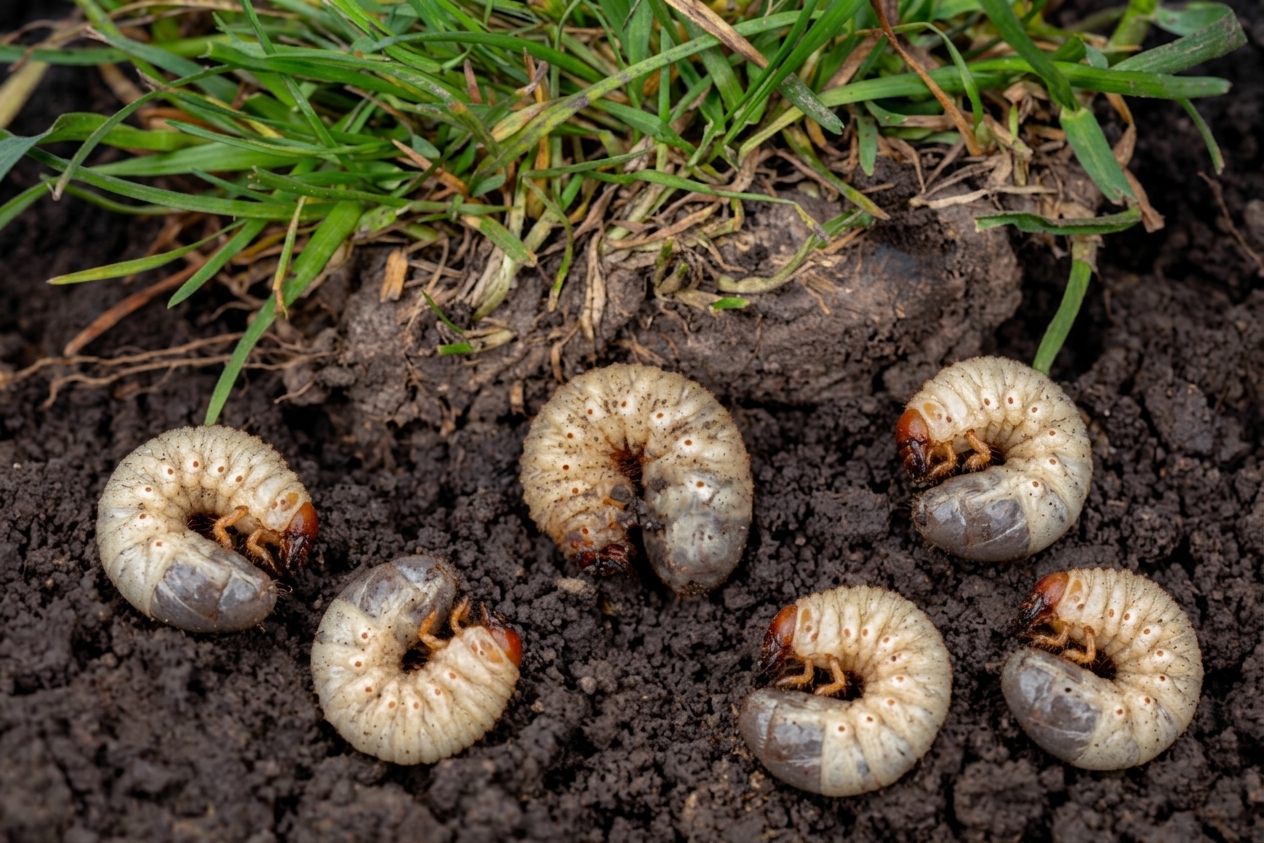
White grubs are the C-shaped larvae of scarab beetles, and they destroy St. Augustine grass roots from 1 to 3 inches underground. Tampa's warm sandy soil and humid summers make Hillsborough County one of the highest-risk areas in Florida.
Three beetle species cause most of the grub damage in Tampa lawns:
- Tomarus subtropicus (sugarcane grub) — the dominant destructive species along Gulf Coast Florida, including Hillsborough and Pinellas counties
- Cyclocephala (masked chafer) — a secondary species common in south-central Florida with a similar one-year life cycle
- Phyllophaga (May and June beetles) — Florida hosts approximately 54 species in this genus alone, with larvae ranging from 20mm to 45mm at full size
The clock starts in spring. Adult beetles push out of the soil in May and June. Females drop eggs into the upper soil layers in June and July. Those eggs hatch by late June or early July. By October, the larvae hit their third and most destructive stage, up to 2 inches long, and keep feeding through April.
Tampa's sandy soil holds just enough moisture to pull in egg-laying beetles. If you water your lawn every day during May, June, and July, you are sending female scarab beetles an invitation. A lawn on a daily irrigation schedule during beetle flight season is 3 to 4 times more attractive to egg-laying females than a lawn on a deep, infrequent schedule.
Zone 9b heat speeds everything up. Tampa grubs hatch earlier, feed harder, and cause damage faster than grubs in northern states. National advice about grub timing runs 4 to 6 weeks behind Tampa Bay reality.
