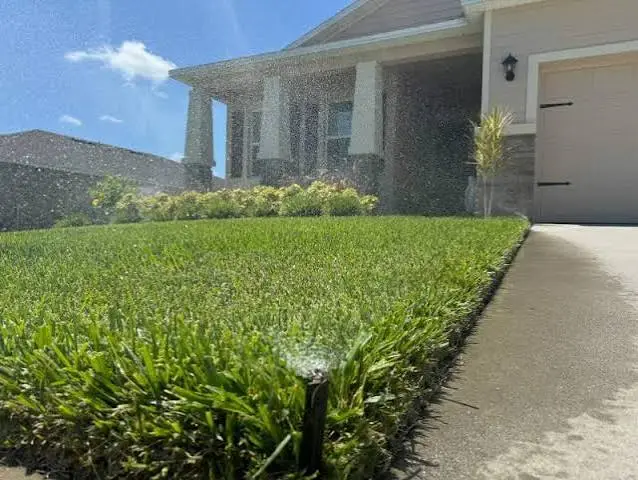
St. Augustine lawn care calendar for a Tampa Florida yard
St. Augustine Care

St. Augustine Lawn Care Schedule in Tampa: Month-by-Month Guide

Your Full-Year St. Augustine Care Calendar for Tampa

This is your full-year lawn care calendar for St. Augustine grass (Stenotaphrum secundatum) in Tampa and Hillsborough County. It covers mowing height, watering, fertilization, weed control, and pest timing month by month. Tampa Bay's hot, wet summers and mild, drier winters create a growing season that rewards careful planning over guesswork.

This calendar is built around local rules, including Hillsborough County Ordinance 21-42, which bans nitrogen and phosphorus fertilizer from June 1 through September 30. From here on, we'll just call it the blackout. You'll also learn how to spot yellow or thinning areas caused by pests, fungal disease, or watering problems. Mow St. Augustine at 3 to 4 inches year-round, and plan on fertilizing 3 to 4 times during the growing season, totaling 2 to 4 pounds of nitrogen per 1,000 square feet annually. If managing all of this feels like a lot, our St. Augustine lawn care Tampa program handles it for you.

January: Winter Mowing, Light Watering, and Lawn Inspection

In January, your St. Augustine lawn sits in winter dormancy or very slow growth, so care stays light. Keep your mowing height at 3.5 to 4 inches and mow only every 3 to 4 weeks if the grass grows tall enough to need it.

Water only when needed, aiming for 0.25 to 0.5 inches per week from irrigation if rainfall drops below 0.5 inches. Tampa Bay watering rules limit you to one day per week during specific overnight hours.

  • Clear leaves and debris from the yard
  • Check for thatch thicker than 0.5 inches and dethatch if it exceeds that level
  • Look for brown patch or large patch scars left over from cool, wet weather
  • Walk the lawn and mark thin or yellow areas to check against our yellow grass diagnosis guide

Skip fertilizer entirely this month, and hold off on pre-emergent too since the soil stays too cool to activate it. Cold winter temperatures also keep insect pressure low right now.
February: Pre-Emergent Setup and Early Weed Control

February is when you prepare your St. Augustine lawn for spring with pre-emergent weed control and continued light care. Apply pre-emergent herbicide from mid-February to mid-March to target summer annual weeds before they sprout.

Only treat established lawns older than one year, using products labeled safe for St. Augustine at label rates. Skip post-emergent herbicides during turf green-up.

Keep mowing light at 3.5 to 4 inches every 2 to 3 weeks, just to keep the yard tidy. Water about 0.5 inches per week including rainfall, sticking to your assigned Tampa Bay irrigation day.

Start watching sunny, dry spots for early chinch bugs or mole crickets. Major infestations come later, but scouting now makes early treatment easier if something shows up.

March: Spring Green-Up and First Fertilizer Window

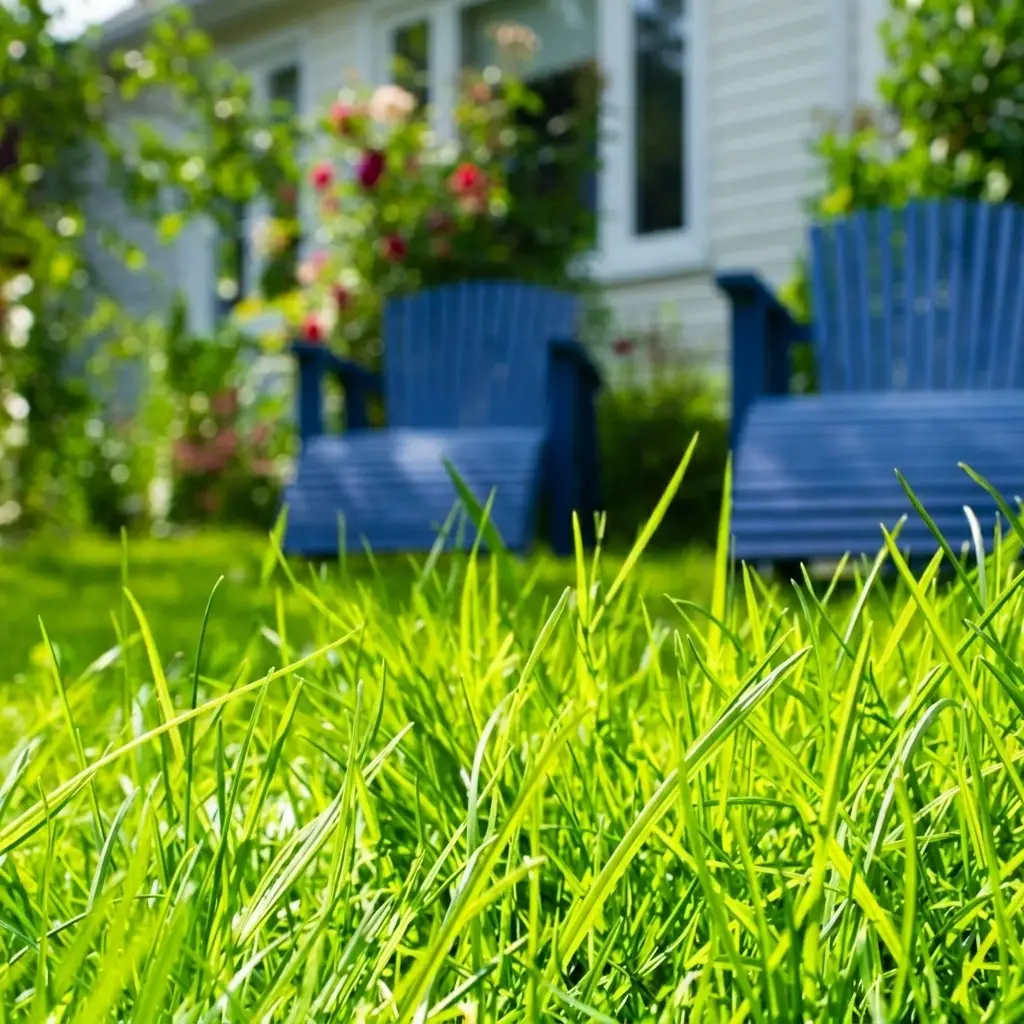
Blue chairs set up in a healthy Tampa St. Augustine lawn

In March, you help your St. Augustine grass wake up with careful mowing, watering, and the first feeding of the year. As soil warms, lower your mowing height slightly to 3 to 3.5 inches and mow every 10 to 14 days with a sharp blade.

Watering needs increase to about 0.75 to 1 inch per week from rain plus irrigation, split into one or two deep sessions on your assigned days.

Apply a balanced fertilizer like 16-4-8 once at least 50 to 60 percent of the lawn has turned green. A moderate rate of 0.5 pound of nitrogen per 1,000 square feet works well for this first feeding, and a slow-release formula keeps it feeding steadily. Check our lawn fertilizer service Tampa guide for exact rates by lawn size.

Finish any remaining pre-emergent applications before soil hits about 65°F to keep crabgrass from taking hold as the growing season ramps up.

April: Active Growth, Mowing Routine, and Disease Watch

In April, your St. Augustine lawn enters active growth, so mowing, watering, and monitoring all step up. Mow at 3 to 3.5 inches every 7 to 10 days, and never remove more than one-third of the blade in a single cut. Bag clippings if you go over that.

Water established St. Augustine 1 to 2 times per week, totaling about 1 inch. Deep, infrequent sessions soak the root zone without leaving grass wet enough to invite fungus.

Check shady areas and low spots for early brown patch or large patch, which show up as yellow rings or water-soaked patches after cool, damp nights. April is also a good time for core aeration if your soil is compacted, especially in clay or heavy sand areas. Dethatch small spots if thatch runs over 0.5 inches.

If you already fed in March, keep this month's fertilizer modest. Apply ferrous sulfate or minor nutrients if color looks pale but growth stays strong. St. Augustine responds better to steady, light feeding than a heavy single dose.

May: Heat Build-Up, Raising Mowing Height, and Second Feeding

May brings rising summer heat, so you raise your blade height and time your second fertilizer application before the June 1 cutoff. Mow at 3.5 to 4 inches, and never go below 2.5 inches, since a taller canopy protects roots and crowds out weeds under full sun.

Watering needs increase to about 1 to 1.25 inches per week, staying within twice-weekly local watering limits.

Apply 0.5 to 1 pound of nitrogen per 1,000 square feet in early May, using a potassium-rich, slow-release product. This is your last chance to feed before the blackout starts, and the extra potassium helps the lawn coast through summer without another application.

Monitor for mole crickets and chinch bugs along driveways, sidewalks, and sunny slopes. Treat early activity before real damage sets in.

June: Fertilizer Blackout, Chinch Bugs, and Summer Watering

In June, your focus shifts from fertilization to pest control and watering, since the blackout starts June 1 in Hillsborough County. You lean on mowing, irrigation, and iron supplements instead of nitrogen for the next four months.

Water 1 to 1.5 inches per week depending on rainfall, watering in the early morning to limit fungal disease. Only water when the lawn actually shows drought stress, like folded blades or footprints that stay visible.

Chinch bugs are the most common pest concern affecting St. Augustine in Tampa. As temperatures climb into the 90s, watch for irregular brown patches in full sun spreading along curbs and dry edges. St. Augustine is sensitive to 2,4-D herbicide, so when treating summer weeds like nutsedge or dollar weed, choose selective products labeled safe for St. Augustine, applied during cooler morning hours.

Gray leaf spot shows up on new growth during humid, rainy stretches. Avoid night irrigation and skip nitrogen entirely to keep it from spreading.

July and August: Peak Summer Stress, Disease Prevention, and Water Management

July and August are the toughest months for St. Augustine grass in Tampa, so consistency matters more than ever. Keep mowing at 3.5 to 4 inches every 7 to 10 days with a sharp blade. A dull blade tears grass instead of cutting it, leaving brown tips that weaken the whole canopy.

Water three-quarters to 1 inch per session, keeping total weekly irrigation at 1 to 1.5 inches and adjusting down for heavy thunderstorms. Avoid daily light watering, which leads to shallow roots and fungus-friendly, spongy soil.

Watch for gray leaf spot and large patch during humid stretches, and hold off on nitrogen completely since it feeds fungal disease during the blackout.

Chinch bugs remain the most damaging pest through peak summer. Check hot, sunny areas weekly, and pour soapy water over suspect brown spots to see if tiny black-and-white insects surface. More than six grubs per square foot in the soil also calls for insecticide treatment.

For weeds, spot-treat dollar weed and nutsedge with selective post-emergent products safe for St. Augustine, watering the lawn thoroughly first for best results.

September: Transition from Blackout to Fall Recovery

September is a transition month where you plan fall recovery while the blackout is still technically in place. Continue avoiding nitrogen, but iron or minor nutrients are fine if the lawn looks pale yet otherwise healthy.

Lower mowing height to 3 to 3.5 inches as nights cool, and expect frequency to drop to every 10 to 14 days as growth slows. Maintain about 1 inch of water per week including rainfall.

Apply a second pre-emergent herbicide 8 to 10 weeks after your spring application to target winter annual weeds before they germinate.

This is also a key time to scout for lingering large patch spots. If the same areas get infected year after year, plan a fall fungicide program now and mark those zones to compare against winter and spring conditions.

October and November: Fall Fertilization, Weed Control, and Mowing Adjustments

Once the blackout ends October 1, you complete your final fertilization and start easing the lawn toward winter. Use a lower-nitrogen, higher-potassium formula to support winter hardiness, applying about 0.5 to 0.75 pound of nitrogen per 1,000 square feet. Do not fertilize St. Augustine after mid-October, which keeps your annual total in the 2 to 4 pound range once combined with spring and May feedings.

Mow at 3 to 3.5 inches until growth slows, then raise height by about 0.5 inch before the first cool front to protect the crowns. Mowing frequency drops to every 10 to 14 days. Keep watering at 0.5 to 0.75 inches per week if rain is scarce, since dry soil paired with sudden cold can damage roots.

Apply a second fall pre-emergent 8 to 10 weeks after the September treatment, and spot-spray broadleaf weeds and winter grasses with a targeted post-emergent product.

December: Winter Protection and Planning Ahead

December care for St. Augustine in Tampa focuses on winter protection, light maintenance, and planning for the year ahead. Skip fertilizer entirely, and only mow if blades grow taller than about 4 inches, using a sharp blade even for occasional winter cuts.

Water 0.25 to 0.5 inches per week, only when soil is dry and no rain is forecast. A light watering before a cold snap helps protect crowns from freeze damage.

Walk the yard and mark areas that stayed thin, yellow, or disease-prone through the year, cross-checking against our yellow grass diagnosis guide.

  • Schedule a soil test to guide next year's fertilization
  • Review your fertilization schedule for the coming year
  • Decide if mowing heights or irrigation zones need adjusting
  • Take photos of chronic problem spots like recurring brown patch rings or stubborn dollar weed

Special Care for New Sod and Repair Areas in Tampa

New sod and repair patches follow a different schedule during the first 30 days than established St. Augustine lawns. Each piece needs constant soil moisture contact to root properly, which means more frequent watering than your normal schedule allows.

TimeframeWatering FrequencyGoal
Days 1 to 72 to 3 times per dayKeep seams and roots moist without flooding
Week 2Once daily, morning onlyReduce surface saturation
Week 3Every other dayEncourage roots to reach native soil
Week 4+Transition to established scheduleMatch normal 1 inch per week

This frequent watering is the one exception to normal water restrictions, so check with your local utility for a new sod exemption.

Delay the first mow until sod reaches about 4 inches tall and passes a gentle tug test, then cut it down to 3 to 3.5 inches with a sharp blade, never removing more than one-third of the blade in that first pass.

Apply a very light fertilizer, around 0.25 to 0.5 pound of nitrogen per 1,000 square feet, after about 30 days once the sod is rooted and you're outside the blackout window. Skip pre-emergent and strong herbicides on new sod for several months, and hand-pull weeds while the lawn establishes its root system.

Putting It All Together

A healthy St. Augustine lawn in Tampa comes from following this calendar for mowing, watering, fertilization, weed control, and pest monitoring all year long.

  • Mow at 3 to 4 inches with a sharp blade, every 7 to 10 days during the growing season
  • Water about 1 inch per week, adjusting for rain and season
  • Follow the blackout and your fertilization schedule outside of it
  • Scout for chinch bugs, gray leaf spot, and brown patch before damage spreads

Consistent scouting and timely action turn small issues into non-issues before they become expensive repairs.

Get a free lawn analysis.
Our experts know Tampa lawns. We can build a St. Augustine care plan around your specific yard and problem spots.