
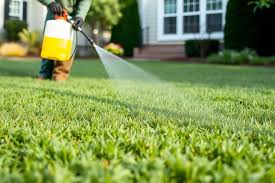
Pre-emergent weed control application in Tampa St. Augustine lawn
Lawn Care

Pre-Emergent Weed Control in Tampa: When to Apply and Why Timing Is Everything

If you have been following a pre-emergent schedule you found online, there is a good chance it was built for somewhere with a normal weed season. Tampa does not have one. Zone 9b runs nearly 300 days of active weed pressure every year, and the standard one or two application schedule that works in most of the country leaves your lawn unprotected for months at a time. Pre-emergent weed control in Tampa requires exactly 3 applications per year, timed to soil temperature triggers rather than calendar dates, with product selection in summer just as important as timing because Hillsborough County Ordinance 21-42 bans nitrogen from June 1 through September 30.

Our lawn weed treatment Tampa program covers the full Tampa Bay area with all 3 application windows built into every annual program.

What Pre-Emergent Actually Does and What It Cannot Stop

Pre-emergent herbicides create a chemical barrier in the top 0.5 to 1 inch of Tampa's Myakka sandy soil that stops crabgrass, Poa annua, goosegrass, and winter annual weeds from germinating. But they provide zero control for existing weeds, nutsedge, or dollar weed. Understanding that difference before you apply saves you a lot of frustration.

The name tells you exactly how it works. A pre-emergent is a herbicide you apply before weeds appear, not something that kills plants you can already see. It creates a microscopic chemical shield in the top layer of your soil. When a weed seed germinates and the root or shoot contacts that barrier, cell division stops and the seedling dies before it ever breaks the surface.

The limitation is just as important to understand. The barrier only works before germination. Once a weed has pushed through the soil surface and you can see it, the pre-emergent window for that plant is already closed.

Weed CategoryExamplesPre-Emergent Control
Annual grassy weedsCrabgrass, goosegrass, sandspurHigh
Winter annual weedsPoa annua, henbit, hairy bittercressHigh
Summer annual broadleaf weedsFlorida pusley, chamberbitterModerate
Perennial sedgesNutsedge, kyllingaZero
Perennial broadleaf weedsDollar weedZero
Existing visible weeds above groundAny species already emergedZero

Nutsedge and dollar weed escape the barrier for biological reasons. Nutsedge spreads through underground tubers that push straight through the chemical layer. Tubers are not seeds so the pre-emergent mechanism never intercepts them. Dollar weed spreads through rhizomes rather than seeds and the same bypass applies. Both need dedicated post-emergent programs. For nutsedge, the correct protocol is in our nutsedge control Tampa article. For dollar weed, see our dollar weed control Tampa article.

There is one more risk worth understanding before you apply. The same mechanism that stops a crabgrass seed from rooting also stops new St. Augustine roots from establishing if you apply pre-emergent too soon after new sod installation. This is called root pruning and it is why the new sod wait period exists.

Not sure what weeds are in your Tampa lawn or whether pre-emergent is the right tool? Four Seasons Lawn Care identifies the exact weed species and builds the correct treatment program for homeowners across the Tampa Bay area.
Why Tampa Lawns Need 3 Pre-Emergent Applications Per Year

Tampa St. Augustine lawns require 3 pre-emergent applications per year because Zone 9b's 300-day growing season is more than 200 days longer than the residual window of prodiamine and dithiopyr. One or two applications simply cannot cover that kind of weed pressure.

Here is the core problem. Prodiamine and dithiopyr provide 6 to 12 weeks of residual protection. In northern climates with a 90-day weed season, one spring application covers the entire window. In Tampa's Zone 9b, weed pressure continues year round and a single February application leaves a 6-month unprotected gap before October.

Orlando homeowners in Zone 9a can manage with 2 applications because cooler winters create a natural break in weed germination pressure. Tampa's coastal position in Tampa Bay keeps soil warm enough for weed germination through most of the year. That one climate difference, Zone 9b versus Zone 9a, changes the entire pre-emergent calendar. For how Zone 9b affects your full lawn care schedule, see our lawn fertilization program Tampa resource.

Application WindowTiming TriggerPrimary TargetRegulatory Context
Spring — February55°F soil risingCrabgrass, sandspur, Florida pusleyPre-blackout compliant
Summer — JuneResidual expires — 65°F soilDoveweed, goosegrass, chamberbitterBlackout period — 0-0-7 products only
Fall — October70°F soil fallingPoa annua, henbit, hairy bittercress, rescuegrassPost-blackout compliant

The June application is the most frequently missed window in Tampa and national content never mentions it. Tampa homeowners who apply only in February and October watch summer weeds take over in July when the spring barrier has already degraded and the fall application is still 3 months away.

The Spring Window: When to Apply Pre-Emergent in Tampa

Tampa homeowners apply the spring pre-emergent between late January and mid-February when soil temperatures cross 55 degrees. That is 2 to 4 weeks earlier than the generic Central Florida calendar most national lawn guides recommend, and the reason is measurable.

Zone 9b's maritime position in Tampa Bay moderates winter night temperatures and accelerates spring soil warming compared to Zone 9a inland Central Florida. Soil crosses the 55 degree crabgrass germination threshold in late January to mid-February in the Tampa Bay area, while inland Central Florida does not reach it until late February to early March.

Two timing indicators give you a precise application trigger.

The soil temperature indicator is the most accurate. Check fawn.ifas.ufl.edu for the Balm or Dover station 4-inch soil temperature reading. When it crosses 55 degrees for several consecutive days, apply immediately. The Florida Automated Weather Network is a free public resource. The Balm station covers south Hillsborough County and the Dover station covers east Hillsborough County.

The air temperature field indicator works well for homeowners who do not own a soil thermometer. Apply before your area experiences air temperatures of 65 to 70 degrees for 5 consecutive days.

Waiting for March is a mistake specific to Tampa. The rule is early February for South Florida and mid-February for Central Florida. Tampa sits at the boundary of those regions. By March the germination window for crabgrass is already open in Zone 9b and the barrier is too late for that first flush.

The split application strategy is the professional standard for Tampa. Apply half the yearly label rate in late January or early February when the 55 degree trigger is confirmed. Apply the second half 4 to 6 weeks later in late February or early March. This extends residual coverage into late May or early June without exceeding the yearly label rate, giving you longer protection than a single full-rate application through Tampa's long spring growing season.

The spring application targets crabgrass (Digitaria sanguinalis), sandspur (Cenchrus echinatus), Florida pusley (Richardia scabra), and chamberbitter (Phyllanthus urinaria).

The Summer Application: Why Tampa Needs a Third Pre-Emergent Round

Tampa's June pre-emergent application targets doveweed (Murdannia nudiflora) and goosegrass (Eleusine indica) that germinate at 65 degree soil temperature just as the spring herbicide residual expires. This application requires nitrogen-free 0-0-7 products because Hillsborough County Ordinance 21-42 bans nitrogen from June 1 through September 30.

Doveweed escapes spring applications because of its later germination trigger. Crabgrass germinates at 55 degrees. Doveweed germinates at 65 to 70 degrees, which is weeks later in the season. A February application is timed for crabgrass, and the barrier degrades long before doveweed begins germinating in April and May.

The residual gap is why June is a required window. A February prodiamine or dithiopyr application provides 6 to 12 weeks of residual protection. By late May or early June that barrier is gone. Goosegrass germinates 3 to 4 weeks after crabgrass, which is another weed that moves into an unprotected lawn right at this moment.

Blackout compliance makes product selection critical in June. Ordinance 21-42 bans nitrogen and phosphorus from June 1 through September 30. That one rule separates the correct June product from an ordinance violation.

ProductLegal June through SeptemberActive IngredientSafe for St. Augustine
Scotts Bonus SIllegal — contains nitrogenAtrazineYes — herbicide component safe
Nitrogen-free prodiamine 0-0-7Legal — nitrogen-freeProdiamineYes
Pendimethalin granularLegal — nitrogen-freePendimethalinYes
Atrazine liquidLegal — no fertilizerAtrazineYes
Dithiopyr liquidLegal — no fertilizerDithiopyrYes

Scotts Bonus S is safe for St. Augustine as a herbicide, but its nitrogen content makes the entire product an Ordinance 21-42 violation from June 1 through September 30. This is the most common blackout mistake Tampa homeowners make. The bag looks like a pre-emergent. The herbicide works. The nitrogen is what makes it illegal.

The June pre-emergent window is where most Tampa homeowners either miss the application entirely or violate Ordinance 21-42 with the wrong product. Four Seasons Lawn Care handles the summer application with fully compliant nitrogen-free programs.

The Fall Window: When to Apply Pre-Emergent in Tampa

Tampa homeowners apply the fall pre-emergent between late September and mid-October when soil temperatures drop to 70 degrees. That is 2 to 4 weeks earlier than national guidance suggests for the Southeast, and if you wait too long the weeds have already germinated and the barrier does nothing.

The fall window is a race against soil temperature. Poa annua and winter annual weeds germinate when soil temperatures drop below 70 degrees. If the soil crosses that threshold before you apply, those weeds are already in the ground and the barrier cannot stop them.

Tampa's fall window is earlier than the national Southeast calendar for the same reason that drives earlier spring timing. Zone 9b soil temperatures drop to 70 degrees in late September to mid-October. National guidance often cites October to November for the Southeast. Waiting until November in Tampa means Poa annua has already established and will stay clumpy and visible through the entire winter.

In Central Florida, proper control of winter annual weeds requires applying pre-emergence in mid-October into mid-November. Tampa's Zone 9b crosses the 70 degree threshold earlier, making late September to mid-October the correct Tampa window.

The end of Tampa's rainy season actually gives the fall application a natural advantage. October soil retains enough moisture from the rainy season to activate granular pre-emergent without supplemental irrigation in most cases. If October is unusually dry, irrigate 0.5 inches within 24 hours of granular application.

The fall application targets Poa annua, which is the clumpy blue-green annual bluegrass that shows up in Tampa St. Augustine during cool months, along with henbit (Lamium amplexicaule), hairy bittercress (Cardamine hirsuta), and rescuegrass (Bromus catharticus). All 4 are controlled by prodiamine or dithiopyr applied before soil crosses 70 degrees.

What Pre-Emergent Is Safe for St. Augustine Grass in Tampa

Prodiamine, dithiopyr, pendimethalin, atrazine, benefin, and bensulide are all safe for established Floratam St. Augustine grass in Tampa when applied at label rates. Products containing 2,4-D, Dicamba, or Quinclorac damage or kill St. Augustine and should never be used on Tampa lawns.

Product safety in Tampa is grass-specific. The Floratam cultivar that dominates the Tampa Bay area is sensitive to herbicides that are perfectly safe for northern cool-season grasses like fescue or Kentucky bluegrass. A Tampa homeowner buying a product labeled for northern lawns may unknowingly damage their Floratam without realizing the product was never intended for their grass type.

The Quinclorac warning is the most critical one in this section. Quinclorac is an active ingredient in many retail crabgrass killers designed for northern lawns. It causes vascular collapse in St. Augustine grass within approximately 14 days. Always check the active ingredient list on the back of the bag, not just the brand name on the front.

Active IngredientSt. Augustine SafetyPrimary AdvantageRestriction
ProdiamineHigh — safe at label ratesLongest residual 4 to 5 monthsEstablished turf only
DithiopyrHigh — safe at label ratesEarly post-emergent on young crabgrassCheck label for new turf
AtrazineSafe at label ratesBroadleaf plus grassy controlWater body setback required
PendimethalinSafeBroad retail availabilityStaining risk on hard surfaces
BenefinSafeOlder active ingredientNarrower weed spectrum
2,4-DDo not use — damages St. AugustineN/AAvoid entirely
DicambaDo not use — damages St. AugustineN/AAvoid entirely
QuincloracDo not use — kills St. AugustineN/AAvoid entirely

The atrazine water body restriction is a Tampa-specific concern worth knowing before you apply. Atrazine is mobile in soil and leaches into groundwater or runs off into surface water. Do not apply atrazine within the setback distance specified on the product label from any retention pond, canal, or drainage ditch. Many Tampa Bay area homeowners live within short distances of retention ponds. Check the label before you apply, not after.

Indaziflam is a professional-grade active ingredient used by Tampa lawn companies for superior doveweed control. It is not available at retail stores.

Do not apply pre-emergent within 2 to 4 months before planting new St. Augustine sod. The barrier inhibits root establishment and the sod stays loose and eventually fails. Verify the specific waiting period against your product label before any sod project.

Picking the wrong pre-emergent in Tampa can destroy your St. Augustine lawn or violate county ordinances. Four Seasons Lawn Care uses only products confirmed safe for Floratam and compliant with Tampa Bay area regulations.

Liquid vs Granular Pre-Emergent: Which Works Better in Tampa

Granular pre-emergent works best for Tampa's June through September rainy season when daily thunderstorms reliably deliver the 0.5 inches of activation moisture needed within 24 hours. Liquid pre-emergent works better for the spring application in January and February when Tampa's dry season means no rain may fall for days after you apply.

Granular pre-emergent uses inert carrier granules coated with the active herbicide ingredient. The granule has to dissolve in water first, then the herbicide releases into the soil and forms the barrier. No water means no dissolved granule and no protection.

Liquid pre-emergent works differently. The active ingredient is already suspended in a water-based carrier. It contacts soil particles immediately on application, activates faster than granules, and delivers more uniform coverage when properly calibrated.

FormatApplication MethodActivation RequirementBest Tampa Window
GranularBroadcast spreader0.5 inches water within 24 hoursJune through September — daily rains provide activation
Liquid concentrateTank or backpack sprayer0.5 inches water within 48 hoursJanuary and February — activates without waiting for rain
Hose-end sprayHose attachment ready-to-useActivates on applicationSmall lawns and spot treatment

Photodegradation is the most common reason pre-emergent fails in Tampa and most homeowners never hear about it. You apply granular pre-emergent in February, no rain falls for 7 to 10 days, the granules degrade on the grass blade surface from Florida's intense UV, and the barrier never forms. The homeowner thinks the product failed. But the product was never activated in the first place. If no rain is in the 7-day forecast when you apply granular in February, irrigate 0.5 inches immediately after application.

Spreader calibration protects both your lawn and your investment. Calculate your exact lawn square footage, subtract pavement and buffer zones, set the spreader to the label rate for your lawn size, and walk at a consistent pace across the entire area. Over-application stunts St. Augustine. Under-application leaves gaps where weeds germinate freely.

What Weeds Pre-Emergent Controls in Tampa and What It Misses

Weed control Tampa St. Augustine lawn

Pre-emergent programs in Tampa control crabgrass, goosegrass, Poa annua, sandspur, Florida pusley, henbit, and chamberbitter. They provide zero control for nutsedge, dollar weed, established bermudagrass, or any weed that is already visible above ground when you apply.

Weed SpeciesTypePre-Emergent ResponseAction Required
Crabgrass (Digitaria sanguinalis)Summer annualExcellentApply at 55°F soil — spring window
Poa annua (annual bluegrass)Winter annualExcellentApply at 70°F soil — fall window
Goosegrass (Eleusine indica)Summer annualHighApply in June window — germinates 3 to 4 weeks after crabgrass
Doveweed (Murdannia nudiflora)Summer annualModerateUse indaziflam for best control
Sandspur (Cenchrus echinatus)Summer annualHighApply in early February window
Florida pusley (Richardia scabra)Summer annual broadleafModerateSpring application
Henbit (Lamium amplexicaule)Winter annualHighApply in fall window
Hairy bittercress (Cardamine hirsuta)Winter annualHighApply in fall window
Dollar weed (Hydrocotyle spp.)Perennial broadleafNoneAtrazine post-emergent plus irrigation reduction
Nutsedge (Cyperus spp.)Perennial sedgeNoneHalosulfuron-methyl post-emergent
Established bermudagrassPerennial grassNonePhysical removal or spot glyphosate only

The weed mismatch problem causes more frustration than any other pre-emergent issue in Tampa. A homeowner applies in February and then sees dollar weed or nutsedge in March and concludes the product failed. The pre-emergent worked exactly as designed. It stopped the annual seeds. Dollar weed and nutsedge require a completely different treatment approach that no pre-emergent product can provide.

This table connects all 3 articles in the weed control cluster. Crabgrass and winter annuals are covered here. Nutsedge has its own dedicated protocol in the nutsedge control Tampa article. Dollar weed has its own dedicated protocol in the dollar weed control Tampa article.

How to Apply Pre-Emergent Correctly in Tampa

Correct pre-emergent application in Tampa requires applying to dry turf with a calibrated spreader or sprayer, activating with 0.5 inches of irrigation within 24 hours, and never aerating or tilling after application. Aeration physically breaks the soil barrier and eliminates pre-emergent effectiveness for the entire season.

  1. Confirm soil temperature using fawn.ifas.ufl.edu — check the Balm or Dover station 4-inch soil temperature reading — apply spring product when reading crosses 55°F, fall product when it drops to 70°F
  2. Measure your lawn area — calculate total square footage, subtract driveways, walkways, garden beds, and buffer zones around surface water
  3. Identify buffer zones — maintain the setback distance specified on your product label from any retention pond, canal, drainage ditch, or surface water — atrazine labels specify this distance explicitly
  4. Apply to dry turf on a calm day — wet blades hold granules above the soil surface and delay activation — wind causes granule drift and uneven coverage
  5. Apply with a deflector shield on the spreader near all pavement edges, driveways, and storm drains — granules on pavement wash into storm drains during Tampa afternoon thunderstorms
  6. Irrigate 0.5 inches within 24 hours — do not wait for rain if the forecast shows no rain within 7 days — photodegradation begins immediately on dry surfaces in Florida's UV intensity
  7. Do not aerate or till after application for the remainder of the active season — aeration pulls plugs of soil out of the ground and physically breaks the pre-emergent barrier — schedule aeration before applying pre-emergent, not after

If dry weather is forecast for more than 7 days after your planned granular application, switch to liquid pre-emergent or irrigate immediately after spreading. Waiting for rain in Tampa's dry winter months is the fastest path to a wasted application.

What Happens If You Miss the Tampa Pre-Emergent Window

If you miss the spring pre-emergent window, apply dithiopyr immediately if crabgrass has just sprouted. Dithiopyr is the only pre-emergent active ingredient with early post-emergent activity on crabgrass up to the 2-tiller stage, which lasts approximately 2 to 3 weeks after germination begins in Tampa's Zone 9b spring.

The dithiopyr rescue window is narrow but real. Dithiopyr has a unique chemical structure that kills crabgrass that has already germinated, as long as the plant is still in its earliest growth stage. The 2-tiller stage means the plant has only 2 side shoots and is still very small, barely visible as an individual plant. This rescue window stays open for approximately 2 to 3 weeks after germination begins.

Prodiamine does not work for rescue. Prodiamine is preventative only. Once crabgrass has broken through the soil surface, prodiamine has zero effect on the existing plant. Only dithiopyr provides this early post-emergent activity.

Weed Growth StageRecommended ActionActive Ingredient
Ungerminated seedStandard pre-emergentProdiamine or dithiopyr
Sprouted — 1 to 2 leavesDithiopyr early post-emergent — apply immediatelyDithiopyr liquid concentrate
Tillering — 3 to 5 leavesSelective post-emergentAtrazine for broadleaf — accept mature crabgrass loss
Mature — seed heads visibleHand removalNo selective post-emergent safe for St. Augustine

Missing the spring window does not mean abandoning the program. The June application for doveweed and goosegrass and the October application for Poa annua and winter annuals are still fully achievable. A Tampa homeowner who misses spring but executes June and October correctly prevents 2 of the 3 major weed flushes. That is a far better outcome than quitting after the first setback.

Established spring crabgrass that has passed the 2-tiller stage is a warm-season annual that dies during Tampa's November to December cool period. The immediate priority is preventing mature crabgrass from dropping seed before it dies. Hand-remove or mow before seed heads fully open.

Professional Pre-Emergent Service vs DIY in Tampa

DIY prodiamine or dithiopyr applied at the correct soil temperature trigger costs $30 to $45 in materials per application for a standard 5,000 square foot Tampa lawn, compared to $65 to $130 for professional service. The professional advantage is access to indaziflam for doveweed control and guaranteed blackout compliance for the June application.

There are 4 things professionals do that most Tampa homeowners cannot easily replicate. They track FAWN soil temperature data and apply at the exact 55 degree or 70 degree trigger rather than estimating from a calendar. They access indaziflam, which provides superior doveweed control and longer residual than retail prodiamine and is not available at Home Depot or Lowes. They know exactly which products are legal during the June 1 through September 30 blackout and eliminate the Scotts Bonus S violation risk entirely. And they calibrate equipment to deliver the exact label rate across the entire property with no striping, no missed zones, and no over-application that stunts Floratam.

The hybrid model works well across the Tampa Bay area. DIY the February and October applications using retail prodiamine or dithiopyr in a 0-0-7 nitrogen-free formulation. Hire a professional for the June blackout application where product selection, compliance risk, and doveweed pressure all peak at the same moment. This approach reduces annual cost while making sure the most technically difficult window is handled correctly.

DIY is the right choice when your lawn is under 5,000 square feet, you are comfortable monitoring FAWN soil temperature data, you purchase a 0-0-7 nitrogen-free product, you irrigate 0.5 inches within 24 hours of every application, and you have no persistent doveweed problem.

Calling a professional makes more sense when your lawn exceeds 5,000 square feet, you have a prior blackout violation or product confusion, persistent doveweed does not respond to retail prodiamine, your lawn sits within 10 feet of a retention pond requiring atrazine label verification, or you cannot monitor FAWN soil temperature data consistently.

Leave the soil temperature monitoring, the June compliance, and the doveweed control to us. Four Seasons Lawn Care builds 3-application annual pre-emergent programs for Tampa Bay homeowners built around the Zone 9b timing calendar.

Frequently Asked Questions

When should I apply pre-emergent in Tampa Florida?

Apply the spring pre-emergent between late January and mid-February when air temperatures reach 65 to 70 degrees for 5 consecutive days or soil temperatures cross 55 degrees, confirmed by checking fawn.ifas.ufl.edu for the Balm or Dover station reading. Apply the fall pre-emergent between late September and mid-October when soil temperatures drop to 70 degrees. Apply a third time in early June to block doveweed and goosegrass as the spring residual expires.

What is the best pre-emergent for St. Augustine grass in Florida?

Prodiamine in a nitrogen-free 0-0-7 formulation is the professional standard for established Tampa Floratam lawns because of its long 4 to 5 month residual and high safety margin. Dithiopyr is preferred for the spring window when timing is uncertain because it provides early post-emergent activity on young crabgrass up to the 2-tiller stage.

Can I use Scotts Bonus S during the summer in Tampa?

Scotts Bonus S contains nitrogen fertilizer in addition to atrazine, and the nitrogen component makes it a violation of Hillsborough County Ordinance 21-42 from June 1 through September 30. Use a 0-0-7 nitrogen-free prodiamine product or a liquid dithiopyr product for the June application. Both are legal during the blackout period.

Does pre-emergent stop nutsedge and dollar weed?

Pre-emergent provides zero control for nutsedge and dollar weed. Nutsedge spreads through underground tubers that push through the pre-emergent barrier without any effect. Dollar weed is a perennial that spreads through rhizomes rather than seeds. Both require dedicated post-emergent programs, halosulfuron-methyl for nutsedge and atrazine plus irrigation reduction for dollar weed.

What happens if I apply pre-emergent after crabgrass has already sprouted?

Apply dithiopyr immediately if crabgrass has just emerged. Dithiopyr is the only pre-emergent active ingredient with early post-emergent activity on crabgrass up to the 2-tiller stage, approximately 2 to 3 weeks after germination. If crabgrass is past the 2-tiller stage with multiple visible stems, dithiopyr no longer works. Pivot to atrazine for remaining broadleaf weed control and hand-remove established crabgrass.

Is pre-emergent safe on new St. Augustine sod?

Do not apply pre-emergent within 2 to 4 months before planting new St. Augustine sod. The barrier inhibits the root establishment that new sod requires. Verify the specific waiting period against the product label you are using, as some labels allow application after first mowing and full rooting while others require longer waiting periods.

Your Next Step

Pre-emergent weed control in Tampa fails when homeowners follow a national calendar instead of Zone 9b soil temperature data, miss the June doveweed window, or apply a product containing nitrogen during the summer blackout. Four Seasons Lawn Care serves the Tampa Bay area with professional weed treatment programs built around all 3 application windows and the actual soil temperature triggers that determine whether your pre-emergent works or does not. Get your free lawn analysis and find out where your weed prevention program stands.

Get a free lawn analysis.
Our experts know Tampa lawns. We can build a 3-application pre-emergent program around your specific Zone 9b timing and compliance requirements.