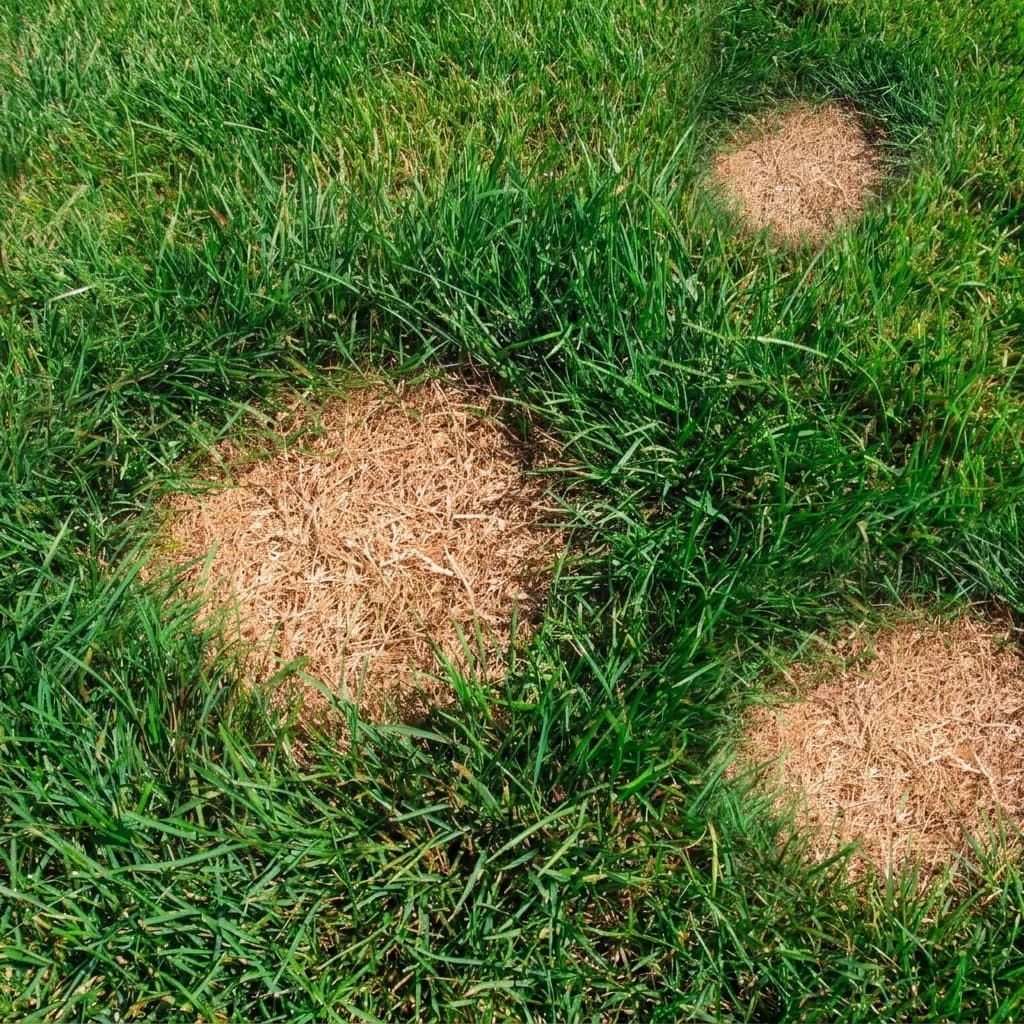
Dead patches in a St. Augustine lawn in Tampa Bay Florida
St. Augustine Care

Dead Patches in St. Augustine Grass: Causes, Diagnosis, and Repair in Tampa Bay

Why St. Augustine Grass Develops Dead Patches

Dead patches in St. Augustine grass are almost never random. They point to a specific problem you can identify and fix. This guide walks you through the common causes of dead spots in St. Augustine grass in Tampa Bay, how to diagnose each one, and exactly how to repair bare spots in your lawn with plugs or sod.

Dead patches in St. Augustine grass in Tampa Bay almost always trace back to one of four groups: insects, disease, water problems, or soil problems. St. Augustine grass (Stenotaphrum secundatum) is the dominant warm-season turf in Hillsborough County because it handles heat, humidity, and coastal soils well. It spreads entirely by stolons across the soil surface, not by seed, which matters when you plan repairs.

St. Augustine grass dying in patches often starts small, around 6 to 12 inches across. Without action, those patches can spread to several feet within 2 to 4 weeks. The most common causes in this area include:

  • Chinch bugs in hot, sunny spots near sidewalks and driveways
  • Grubs feeding on roots in late summer and early fall
  • Large patch fungus in fall and spring
  • Take-all root rot in poorly drained, low-lying areas
  • Drought stress near pavement that radiates heat
  • Compacted soil in high-traffic zones

Thatch thicker than 1 inch traps moisture and shelters the insects that make damage worse. St. Augustine dead patches will not fill in on their own if the stolons and roots are completely dead. You have to fix the cause first, then physically repair the bare spots in the lawn.

Diagnosing the Cause Before You Repair Anything

You diagnose dead patches in St. Augustine grass by looking at where they are, how they spread, and what the grass looks like up close. Guessing is risky. Pest damage, brown patch fungus, drought stress, and compacted soil can all produce similar brown dead spots but require completely different fixes.

  • Look at patch shape, circular versus irregular
  • Note if it is in full sun or shade
  • Check if soil is dry, soggy, or rock-hard
  • Inspect blades and stolons for lesions or rot
  • Tug on the grass to feel if roots are missing or mushy

Concrete visual clues help narrow the cause. Chinch bug damage usually starts near sidewalks, driveways, and curbs. Grub damage makes the turf lift up like loose carpet. Large patch fungus creates circular or ring-shaped brown patches with orange edges. Take-all root rot causes thinning and yellowing before bare areas form in low, wet spots. Gray leaf spot shows up as small gray-tan spots with purple borders on individual grass blades.

Compare yellowing patterns with our yellow grass diagnosis guide for additional clues. Also check your irrigation system for broken or clogged heads, which can create dry spots that mimic pest damage. Nutrient deficiencies cause St. Augustine to grow weak and pale, so rule those out along with mowing scalps, pet urine spots, and recent herbicide use.

Always fix the underlying cause first. Wait 10 to 14 days to confirm the spread has stopped before you move on to physical repair.

Pest-Related Dead Patches: Chinch Bugs and Grubs

Chinch bugs and grubs are two of the most common pest causes of dead patches in St. Augustine grass in Tampa Bay. Many homeowners assume pest damage is drought because the grass looks dry and brown. They water more, which creates wet conditions that invite fungal disease while the insects keep feeding.

Southern chinch bugs thrive in hot, dry, sunny areas and feed on grass sap at the base of the blades. They are most active from late spring through early fall in Hillsborough County. Look for brown patches that first appear in the hottest, driest areas, grass that feels crispy and does not improve after 3 to 4 deep waterings, edges that look yellow to red rather than gray and rotted, and live chinch bugs visible with a hand lens or a soapy-water flush.

For control options and application timing, follow our chinch bug treatment guide.

Grubs feed on grass roots, causing patchy damage that worsens over weeks. Symptoms include patches that start pale green and turn brown as roots are eaten, turf that pulls up easily in sheets especially in late summer and early fall, and birds, raccoons, or armadillos digging at night, which is a red flag for grub activity.

Sod webworms can also create brown patches overnight, so inspect for multiple pests at once. Once insects are fully controlled, wait 2 to 3 weeks to see what recovers, then replace truly dead patches with plugs or sod.

Disease-Related Dead Patches: Large Patch and Take-All Root Rot

Large patch and take-all root rot are the main disease causes of St. Augustine grass dying in patches in Tampa Bay. Both are caused by soil fungi that attack roots and stolons, and both thrive in lawns with frequent shallow watering, heavy thatch, or compacted soil.

Large patch is most active when nights are cool and days are mild, typically October through December and March through April. It creates round or donut-shaped brown patches, often 1 to 10 feet across, with an outer ring that looks orange or yellow while the center stays brown and dead. Leaves at the edge of the patch pull off easily from the stolon, the base of the leaves looks water-soaked or dark brown, and the soil is often damp from evening or nighttime watering.

Overwatering encourages this fungus, so growth accelerates when irrigation runs too often. Applying nitrogen fertilizer too late in fall can promote large patch as well.

Take-all root rot is common in alkaline soils with poor drainage where soil pH rises above 6.5. It shows up more often in poorly drained areas and along downspouts or low spots, starts as weak, thin, yellow turf that never fully greens up in spring, and leaves roots short, dark, and brittle instead of white and fibrous.

Both diseases can leave behind dead spots where stolons are completely rotted and cannot regrow. A targeted fungicide at the first signs of fungus helps control large patch, and systemic options like strobilurins or azoles work best when applied preventively. Long-term control comes from correcting watering habits, mowing height, and soil pH.

Once the disease stops and you see 2 to 4 weeks of stable edges with some new green growth, you can safely repair the remaining dead spots.

Environmental Causes: Drought, Overwatering, and Compaction

Drought stress, chronic overwatering, and compacted soil are three common non-pest reasons you see bare spots and dead patches in Hillsborough County lawns. Tampa Bay homeowners often deal with all three at once in different parts of the same yard.

Drought stress is most common in full-sun areas and near concrete. Blades fold and turn blue-gray before they turn tan, footprints remain visible for several minutes, and grass usually recovers within 7 to 10 days of proper deep watering if the stolons are still alive.

Overwatering is just as damaging. Too much water keeps the top inch of soil soggy, which weakens roots and encourages disease. Signs include daily or every-other-day irrigation keeping standing water in the root zone, roots that stay shallow and weak, and algae or moss on the soil surface along with a sour smell in wet areas.

St. Augustine needs deep, infrequent watering rather than frequent short cycles. Water deeply every 5 to 10 days, applying half to three-quarters of an inch per event so moisture reaches 4 to 6 inches into the soil. In summer, water every 4 to 7 days. In cooler months, every 10 to 14 days works, adjusted for rain.

Soil compaction prevents roots from accessing nutrients and water, creating dead spots along walkways, play areas, and anywhere trucks or mowers turn repeatedly. Compacted soil feels hard and dry even after watering, and a screwdriver is hard to push in. Runners grow across the surface but fail to root, creating thin, weak turf that dies in heat or drought.

Aeration reduces compaction and lets nutrients reach the root zone. Aerate at least once a year, ideally in late spring when the grass is actively growing, and add a thin topdressing of washed sand or sandy loam afterward. Correcting soil quality before repair prevents the same dead patches from returning. Over-fertilization can also burn grass and contribute to dead patches, so apply nitrogen only during active growth from spring through summer.

How to Repair Dead Patches with Plugs

You repair small dead spots in St. Augustine grass by planting plugs into bare soil and letting the stolons spread to fill the gap. Plugs work best when dead areas are under about 3 feet across, the surrounding turf is healthy, and the growing season is active, usually March through September in Tampa Bay.

Gather these supplies: a plugger or hand trowel, sharp spade, 2 to 3 inch St. Augustine plugs that match your existing variety, compost or sandy topsoil, and a sprinkler or hose with a gentle nozzle.

  1. Remove all loose dead thatch and stolons down to bare soil.
  2. Dig out and discard any soft, black, rotted roots.
  3. Loosen the top 3 to 4 inches of soil with a spade or garden fork.
  4. Mix in half to 1 inch of compost or sandy loam if the area has compacted soil.

Removing dead grass improves airflow so healthy runners can spread into the bare spots.

For plug spacing, place plugs 6 to 8 inches apart in a grid for faster fill, or space them 10 to 12 inches apart for a budget repair with a longer fill time.

Each plug hole needs to be slightly wider than the plug itself. Plant so the crown sits level with the surrounding soil, not buried or sitting high. Firm the soil gently around each plug, water until the area is damp 3 to 4 inches deep, and mark the repaired spots so you avoid mowing too low while the plugs root.

Under good summer growing conditions in Hillsborough County, well-watered plugs can close a 2 to 3 foot dead patch in 8 to 12 weeks.

How to Repair Dead Patches with Sod

You repair large St. Augustine dead patches by cutting out the dead turf and installing fresh sod pieces that match your lawn. Sod is the better choice when patches are bigger than 3 to 4 feet across, when many plugs would be needed, or when you want faster results.

In Tampa Bay, the best time to lay St. Augustine sod is when soil temperatures stay above 65°F, usually March through October, giving roots time to establish before winter.

  1. Cut away all dead and weak turf with a flat shovel or sod cutter.
  2. Remove roots, thatch, and debris so you have a clean soil surface.
  3. Smooth the area so it sits half an inch lower than the surrounding lawn to allow for sod thickness.
  4. Address any low spots that held water by regrading or adding soil.

Cut sod pieces to fit the shape of each affected area, and get the edges as tight as possible against the existing healthy grass.

When setting the sod, lay each piece snug with no gaps, stagger seams like brickwork to avoid long straight lines, and gently roll or press the sod to remove air pockets and ensure good soil contact.

For watering, soak the new sod within 30 minutes of installation. For the first 7 to 10 days, keep the sod and the top 2 inches of soil consistently moist but not flooded. After 2 to 3 weeks, taper to deeper, less frequent watering.

Since St. Augustine spreads by stolons, new sod knits into surrounding turf over 4 to 6 weeks if watered and mowed correctly.

Aftercare: Helping Repaired Areas Establish

You keep repaired areas alive and spreading by managing water, mowing, and traffic carefully for the first 4 to 8 weeks. Skipping aftercare is one of the top reasons repairs fail.

Water lightly once or twice per day during weeks 1 and 2 to keep the top 1 to 2 inches moist. During weeks 3 and 4, water every 2 to 3 days at half an inch per event. From week 5 onward, shift to the same deep, infrequent schedule as the rest of your St. Augustine lawn.

For mowing, do not cut the area until plugs or sod are firmly rooted, usually 2 to 3 weeks after installation in warm weather. Standard St. Augustine cultivars do best at 3.5 to 4 inches, while dwarf varieties can be mowed to 2.5 to 3 inches. Never remove more than one-third of the blade height in a single mowing.

For fertilization, wait 3 to 4 weeks after repair before applying anything. Use a balanced, slow-release nitrogen fertilizer at a modest rate during active growth from spring through summer, and avoid high nitrogen in late fall, which raises large patch risk.

Keep people, pets, and heavy equipment off repaired areas so roots grow deeper without creating new compaction problems. Our St. Augustine lawn care schedule helps the new grass blend smoothly with the rest of your yard.

With consistent aftercare, most small patches in Tampa Bay become hard to see after 2 to 3 months of growth.

When to Call a Professional Instead of DIY Repair

You call a professional when you cannot identify the cause, the dead spots keep spreading, or repairs keep failing.

Warning signs that you need help include dead patches spreading across more than 25 to 30 percent of your lawn, new brown patches appearing every week even after you adjust watering, mixed symptoms such as insects plus circular disease spots, and previous sod or plug repairs that died within a few months.

A trained lawn technician can collect soil, root, and thatch samples to identify large patch fungus, take-all root rot, or severe soil compaction. Professionals have access to commercial-grade fungicides and insecticides and know the correct application rates, which reduces the risk of turf burn or resistance.

Four Seasons Lawn Care focuses on St. Augustine lawns in the Tampa Bay climate and understands local watering rules, soil types, and common pest cycles. For very large dead spots, we can re-sod entire sections in one day, adjust irrigation coverage, and give you a realistic recovery timeline.

An expert diagnosis early in the process saves you from paying to re-sod the same problem areas again. Since St. Augustine requires physical repair every time rather than reseeding itself, getting rid of the root cause matters more than the patch itself.

Frequently Asked Questions

How do I know if my St. Augustine is dead or just dormant?

Truly dead grass is straw-colored, breaks easily, and does not show new green stolons after 3 to 4 weeks of proper watering when soil temperatures are above 65°F. Dormant grass will show some green at the stolons and recover when warm, humid weather returns.

Can I overseed dead patches of St. Augustine?

No. St. Augustine is not reliably grown from seed in home lawns. Repair with plugs or sod instead.

How fast will plugs fill in bare spots?

In summer with plugs spaced 6 to 8 inches apart, expect 8 to 12 weeks. In early spring or fall, coverage takes longer because growth slows.

Is it too late to fix dead spots in winter?

You can repair on mild winter days, but growth is very slow below about 65°F soil temperature. Most recovery happens from March through October in Tampa Bay.

What causes brown dead spots near my driveway?

Heat and drought stress combined with chinch bugs are very common near hot pavement. The first signs often look like simple dry spots, so check your irrigation coverage and inspect for pests at the edges of the affected area.

Your Next Step

If you have dead patches in your St. Augustine lawn that keep coming back or spreading, contact Four Seasons Lawn Care for a free lawn estimate. We diagnose the cause, build a repair plan, and handle plug or sod installation anywhere in Tampa Bay so your yard gets back to healthy, green turf.

Get a free lawn analysis.
Our experts know Tampa lawns. We can diagnose the cause and repair dead patches in your St. Augustine grass.